Stick Fighting Techniques (Jodo)

jodo 196x300 Stick Fighting Techniques (Jodo)signup here1 Stick Fighting Techniques (Jodo)What is Jodo?

Jodo is a form of modern budo (way of the warrior) that is based on the traditional short staff techniques of the samurai, who ruled Japan during the Tokugawa Period from 1603 to 1868.

Jodo techniques allow one to control and subdue an opponent who is wielding a sword, using non-lethal techniques.

The legendary founder of jodo, Muso Gonnosuke, was said to have defeated the great swordsman Miyamoto Musashi.

Jodo techniques developed to control unruly samurai to keep the peace, and, in fact, Japanese policemen train in jodo to this day.

About Instructor

Peter Boylan has studied Japanese martial arts for more than 25 years. He trains in Shinto Muso Ryu Jodo under Matsuda Shigeharu Shihan of Osaka.

He began his Jodo training in 1994 in Shiga, Japan, and continues it with frequent visits to Japan.

He also trains in Kodokan Judo (3rd degree blackbelt) and Shinto Hatakage Ryu Iai Heiho (4th degree black belt).
Peter Boylan also holds a Masters Degree in Comparative Religions, with emphasis on Japan.


Date & Time: Every Thursday 8:00 pm to 9:15 pm

Class Fee: $15 (Iaido students get $5 discount)


Ki Development

1 Ki Development


Deeply relax your body and mind

through simple energy movement 


Date & Time: Every Wednesday 7:15 pm – 8:30 pm

Class Fee: $20 for adults  /  $15 for students

                                               signup here1 Ki Development

- Class Overview - 

  • Experience a soft or yin approach to Ki or life-force cultivation
  • Flowing movements stretch the body & stimulate the meridian systems
  • Tachi zen – standing meditation – develops rich & abundant Ki flow
  • Integrate movement, breath & mind power to tap into your life-force
  • Suitable for all ages ,especially seniors, for longevity, balance, stress relief & abundant life-force


Ki development or cultivation involves working with one’s ki or life-force to fortify, strengthen & rejuvenate the body & mind.

It includes practices done seated, standing & those involving gentle, flowing movements that are usually coordinated with the breath.

Seated practice can be thought of as a type of seated meditation & in this way is similar to Zen meditation but also involves visualization, intention & accessing of inner energy flows. Often a seated practice can end or start with a quiet sitting which is similar to the practice of Shikantaza.

Standing practice is often referred to as standing meditation – sometimes known as taichi Zen & involves a relaxed coordination of body, breath & mind along with the holding of specific postures or shapes.

This practice appears deceptively simple from the outside but although not difficult involves a deep inner cultivation of generous amounts of ki or life force.

Also included is a flowing set of gentle movement practices that incorporate stretching & opening the physical as well as the energy body. These are combined with attention to breathing to integrate this process.

Integrating these simple practices over time can benefit the body & mind immensely – helping to reduce stress, promote health & longeveity & super charge one’s Ki or life force.

Ki is free & available for cultivation !

Manga Drawing

IMG 1268 e1337369067551 1024x768 Manga Drawing


On June 3, we will hold a free 30-minute brief session from 2 pm to 3:00 pm. (two sessions)


Date & Time

        June 10 through August 26 (12 weeks) 

         Every Sunday from 1:00 pm to 2:00 pm


                       signup here1 Manga Drawing

Class Fee

12 weeks – $300 ($250 for students)
4 weeks – $110  ($90 for students)
1 week – $30  ($25 for students)

- Schedule -  

  • Week1 : Life Drawing and Figure Drawing.
  • Week2 : Life Drawing and Figure Drawing.  (practice drawing different action poses and learn human anatomy including bone structures and muscles )
  • Week3 : Still life drawing (plants, animals, objects).  Draw imaginary creatures.
  • Week4 : Draw faces, learn facial expressions (ex smiley, angry, sad, wondering, excited, etc….)
  • Week5 : Draw different types of eyes, noses, mouths, ears, and hair.  (Realistic and Manga style)
  • Week6 : Draw hands, arms, feet, and legs.  Cloth drawing. (learn how to draw different type of clothes and fabrics).
  • Week7 : Create Character Board.  Learn how to develop your own character figures and how to present them.
  • Week8 : Continue working on the character board.
  • Week9 : Continue working on the character board and presentation.
  • Week10 : Learn Perspective drawing.
  • Week11 :Create one scene  illustration using black ink. (interaction with characters and  illustrate background also)
  • Week12 : Learn Manga comic layout.
  • Week13 : Create your own short manga comic based on your own story.(2 or 3 pages)
  • Week14 : Continue working on your manga
  • Week15 : Continue working on your manga and presentation.


About Instructor 

geisha 150x150 Manga Drawing Yoko Yabe is a Japanese illustrator and painter. In 2004, she came to America to study media arts and animation at the Art Institute of Fort Lauderdale. After graduating in 2007, she started working as a 3D designer at an architectural company in Japan, but soon realized that her real passion was to become an illustrator and a painter. She worked as a freelance illustrator for a film company, at a t-shirt factory, in publishing — and more — creating concept art, film posters, t-shirt designs, to name just a few. Mostly drawing women in her illustrations and paintings, and expressing the distinct personalities, lifestyles, and cultural backgrounds of each, her style features both traditional and modern Japanese arts. Ms. Yabe’s technique ranges from traditional canvas paintings to modern digital design.

Yoko Yabe  - Official Website
http://myartillustration.blogspot.com/


Japanese Art for Kids


Art + Culture = Future


Unique art course at RESOBOX ” Art + Culture = Future” develops not just creativity of your child but knowledge of other culture and then your kids will be well prepared for a life in a global world.


Date & Time

        June 6 through August 29 (12 weeks) 

         Every Wednesday from 3:30 pm to 4:45 pm


                       signup here1 Japanese Art for Kids

Class Fee

$300 for 12 weeks
$110 for 4 weeks
$30 for 1 week


- Class Overview - 

Japanese ink painting (Sumi-e) and Calligraphy
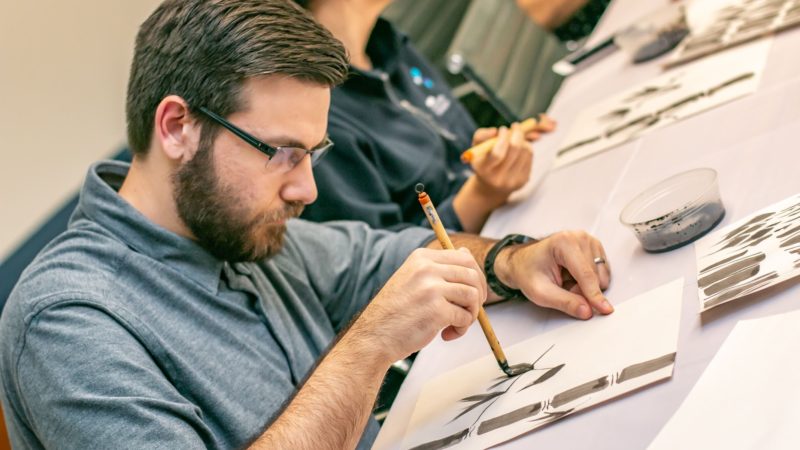
Sumi-e is a black and white painting so you have to focus on how many shades you can create by diluting black ink with water. And the soft brush enables children to create variety of marks. Sumi-e appears to be simple but requires greater concentration and invention in the process. Calligraphy is the graceful artistic representation of written characters using the same tools for Sumi-e.

We share the glimpse of the philosophy of Sumi-e and the beauty of Calligraphy in the course.

04 300x225 Japanese Art for Kids


Origami
Origami came from the Japanese words “Oru” meaning “to fold” and “Kami” meaning “paper.” It is a wonderful experience for children to see a piece of paper gets transformed into an animal, flower or something else. There’s a “Tanabata :Star Festival on July 7th in Japan. Children make decorations and wish cards for this Festival.
21 Japanese Art for Kids


Folding Book
Children make a folding picture book of their precious memories. No writing necessary.
Folding book encourages children to the unique way of telling story.

4 300x224 Japanese Art for Kids


Making a Dharma doll

The Daruma doll (達磨), also known as a Dharma doll, is a round Japanese traditional doll modeled after Bodhidharma, the founder of the Zen sect of Buddhism. The recipient of the doll fills in one eye upon setting the goal, then the other upon fulfilling it. In this way, every time they see the one-eyed Daruma, they recall the goal. You promise to give him full sight once the goal is accomplished.

cid 3B770C01 83EC 41EA ABFD 046AA865FEC4 Japanese Art for Kids


- Class Schedule -
6/6  Japanese ink painting & Calligraphy Lesson 1

Using unique Japanese rice paper, Sumi-ink and brush, children learn how to write their English name in Japanese calligraphic manner.


6/13 Japanese ink painting & Calligraphy Lesson 2

Paint bamboo trees and chicks


6/20 Japanese ink painting & Calligraphy Lesson 3

Complete the work with own calligraphic signature on


6/27 Origami Lesson 1

Make paper decorations and wish cards for the Star Festival.
We tell the Tales of Tanabata.


7/4 No class on July 4th


7/11 Origami Lesson 2

Make simple games and toys for kids


7/18 Origami Lesson 3

Make crane, warrior’s helmet and cards with glued origami works


7/25 Folding Book Making Lesson 1

Talk about their happy memories and start collecting images in their mind.


8/1 Folding Book Making Lesson 2

Painting and drawing for the book


8/8 Folding Book Making Lesson 3

Painting and drawing for the book


8/15 Folding Book Making Lesson 4

Complete the book


8/22 Making a Daruma doll

Complete the doll

Student’s work will be exhibited in the gallery space in September! (TBA)

Japanese Anime Character Drawing for Kids

3 Japanese Anime Character Drawing for Kids

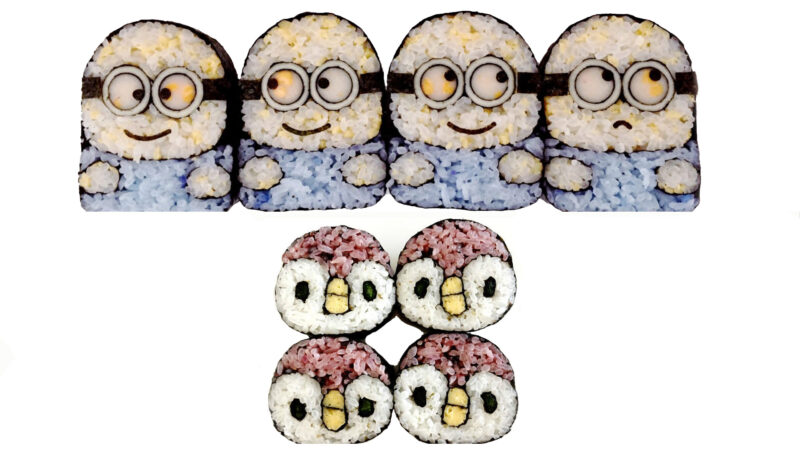
If you are familiar with “Hello Kitty,” “Pikachu” and “Rilakkuma,” then you can easily understand kawaii characters. In this class, using these two concepts together, we will explore Japanese contemporary drawing style to create kawaii characters of our own vision and design.

Date & Time:  Every Sunday 1:00 pm to 2:00 pm  (Trial class – $10 for 30 minutes from 12:30 pm -1:00 pm with prior registration)

signup here1 Japanese Anime Character Drawing for Kids

Class Fee:  $100 per month


 - Brief Course Description -

Week 1 : Introduce some of the Japanese Anime Character such as Doraemon, Pikachu and Hello Kitty and learn how they are different from American comic character

Week 2: Students watch a Doraemon film for 10 minuetes and draw their favorite character

Week 3:  Student watches a Pikachu film for 10 minuetes and draw their favorite characters

Week 4: Now students start creating their own Anime Characters with the ideas of Japanese Anime that they learned last three classes

Once every three months, all artworks created by students will be exhibited at Resobox Gallery.

About Instructor

geisha2 276x300 Japanese Anime Character Drawing for Kids

Yoko Yabe is a Japanese illustrator and painter. In 2004, she came to America to study media arts and animation at the Art Institute of Fort Lauderdale.

 After graduating in 2007, she started working as a 3D designer at an architectural company in Japan, but soon realized that her real passion was to become an illustrator and a painter. She worked as a freelance illustrator for a film company, at a t-shirt factory, in publishing — and more — creating concept art, film posters, t-shirt designs, to name just a few.

 Mostly drawing women in her illustrations and paintings, and expressing the distinct personalities, lifestyles, and cultural backgrounds of each, her style features both traditional and modern Japanese arts. Ms. Yabe’s technique ranges from traditional canvas paintings to modern digital design.

Traditional Japanese Karate


IMG 07291 Traditional Japanese Karate


signup here1 Traditional Japanese Karate

  • Isami Shiroma is a certified JKA (Japan Karate Association ) instructor
  • No Kumite (fighting). Focus on Kata (form)
  • All ages welcome but 5 and up is best. Adults and teens are welcome too!


Date & Time: Every Saturday 10am to 11:30am

Class fee: $20 per class


Kids are welcome!


Official page of Japan Karate Association (JKA): http://www.jka.or.jp/english/e_index.html

JKA at Westchester and Bronx: http://www.jkakarate-shiroma.com/index.html


About the instructor 

IMG 0743 Traditional Japanese Karate

Born in Okinawa, Japan

6th Dan Japan Karate Association June 25th, 2000

A-Class Instructor

A-Class Judge

B- Class Examiner

Founding Member of Hokubei Shihan Kai www.hokubeishihankai.org

Co-founder of Karate Federation of Colombia, 1971

-Liga De Karate-Do of Atlantico (Barranquilla Colombia)

-Liga De Karate-Do of Bolivar (Cartagena)

Founded Academia De Karate Colombo-Japones Isami-Dojo en Barranquilla-1971

1985 Judge at the Pan American Games at Rio De Janeiro, Brazil

Technical advisor for JKA Colombia www.jkacolombia.org

2004 Shotocup Judge, Tokyo Japan

Karate Club at New York University Medical School


Tournament Results :

1978 AAKF Tournament 1st Place Team Kata Winner

Queens, New York

Nonaka, Takahashi, Shiroma

1983 22nd All US ITKF Tournament 1st Place Team Kata Winner

San Francisco, California

Luft, Toryu, Shiroma

1985 AAKF Tournament 1s Place Tema Kata Winner

Princeton University, NJ

Evangelista, Caban, Shiroma

More Results to follow soon


Japanese Ink Painting (Sumi-e)


DSCN2000 Japanese Ink Painting (Sumi e)


Date & Time: Every Saturday 1:00 pm to 2:15pm

Class Fee: $20 for Adult  /  $15 for Student  

signup here1 Japanese Ink Painting (Sumi e)

All materials (ex. Brush, Ink, Calligraphy Paper, etc.) are provided to beginners.

All levels of experience are welcome. Most of our students start from the basic – how to hold a brush.


What is Sumie?

“If we study Japanese art, we see a man who is undoubtedly wise, philosophic and intelligent, who spends his time doing what? …
He studies a single blade of grass.” -Vincent van Gogh

GEDC0103 Japanese Ink Painting (Sumi e)
Sumi-e, also called Suiboku-ga, is the art of ink wash-painting. Characteristically, it is an East Asian art, and has been practiced there for well over a thousand years. Sumi-e depicts the spirit or essence of an object or scene rather than its outward appearance — and does so in the fewest possible strokes. Because of this simplicity, the painter’s character and personality come through in his/her work. In both viewing and creating, Sumi-e is a very contemplative form of painting.

About the Instructor

Ayakoh Furukawa has practiced calligraphy through Nihonshogei-in since she was seven years old, receiving many awards. She also studied under Zen monk calligrapher and painter Sougyu Kashimoto in Osaka, Japan. In New York, she studied Japanese and Chinese Art History at Hunter College, the City University of New York where she received the Master of Fine Art. Her paintings and drawings have been exhibited internationally at numerous art institutions such as Japan Society, Jersey City Museum and the Osaka Municipal Museum of Art.


Okinawan Dance & Music

GEDC04172 Okinawan Dance & Music


Learn Okinawa Ryukyu Cultures
Music, Dance,Language and more!


Date & Time: Every Tuesday 6:30 pm to 8:00 pm (3 times a month)

Class Fee: $25 for Adult  /  $20 for Studentsignup here1 Okinawan Dance & Music


All materials will be provided to beginners.

All levels and experience are welcome.


Okinawan dance is the traditional dance that has developed in Okinawa prefecture, which includes the southernmost islands of Japan.

Okinawan dance is also called Ryukyu dance or Ryukyu Buyo, since it was originally developed during the Ryukyu Kingdom era, between the 15th and 19th centuries.

There are three basic genres of Ryukyu dance: Classical dance (or Court dance), Zo dance and Folk dance.

Classical dance was developed at the Royal Court during the Ryukyu Kingdom era, and was performed to entertain Chinese envoys and Japanese clans. Classical dance movements are generally slow in tempo, with dancers keeping their feet on or close to the floor at all times, and; wearing colorful clothing called Ryukyu Bingata.

DSC06383 Okinawan Dance & Music

Zo dance developed in the local theaters after the Ryukyu Kingdom era ended with the creation of Okinawa Prefecture in the late 19th century. Zo dancers dress in casual kimono like those worn by ordinarily people, but Zo dance movements are much more energetic and fast in tempo.

In learning Okinawan dance, students get to experience both formal classical and Zo dances, dancing roles that express love and other aspects of the human condition.
The other type of Okinawan dance is called folk dance. It dates back to the 600s, and has evolved ever since from the ceremonial arts used by priestesses to express their appreciation to the gods in the spirit of prayer.

Folk dances often incorporate the use of an unusual type of drum called Eisa [E-i-sa-] – Bon dance (or bon odori), which are becoming very popular not only Okinawa but throughout Japan.


About Instructor

Junko Fisher was born in Yomitan Village, on the main island of Okinawa, Japan. Her late uncle, a professional actor in the Taishin Za theatre group and a dancer of the Miyagi Ryu Okinawa Dance Company, took Junko to the theatre when she was only six months, to play the part of a baby in a play, a part for which she was well suited for at the time.

Junko began practicing Okinawan Dance at the age of five, when her mo

IMG 00331 226x300 Okinawan Dance & Musicther, also a dancer, began taking Junko along to dance school. Starting with her first performance at the age of seven, at the Yomitan Village Town Hall. She had numerous performance experiences during her years in Okinawa.

Junko moved to Tokyo after graduating high school and studied Japanese traditional dance at the Gojo Ryu School while she was attending college. She attained her certificate of Natori, Gojo Miyano. Her first performance in that style was at the National Theatre in Tokyo in 1985.

Junko has 28 years experience of dancing, including both Japanese and Okinawan dance. She resides in New York City, where she focuses on Ryukyu Performing Arts as a member of the Miyagi Ryu Nosho-kai Ryukyu Dance School, and she is an instructor of the New York branch school.


Japanese Classical Dance (Nihon Buyo)


Date & Time: Every Monday 6:30 pm to 7:45 pm

Class Fee: $20 for Adult / $15 for Studentsignup here1 Japanese Classical Dance (Nihon Buyo)


All materials are provided to beginners.

All levels of experience are welcome.


Japanese classical dance was born about 1603, along with the first performances of Kabuki Theatre. In Japanese, it is also called Nihon buyō or nichibu. Even today, all Kabuki actors must first learn to dance. You can study this style of dance, too, even if you are not Japanese.

In Japanese classical dance, the dancer interprets the poetry being sung in addition to dancing along with the music. For instance, if the words of the song say, “It was a very hot day,” the dancer might fan herself to show how hot it is, or if the words refer to a gentle breeze, the dancer’s movements themselves could become the cool breeze. Sometimes the dancer moves or stamps rhythmically to the music, too.Teaching walking 2 300x244 Japanese Classical Dance (Nihon Buyo)

A fan (osensu) helps interpret the poetry by representing many things and illustrating many moods. Fans can be used completely closed, with one rib open, or fully opened.The kimono can be either leotard or costume; even its sleeves are used as part of dance. Myriad small hand props, such as an umbrella (kasa) or hand towel (tenugui), enhance the poetic meaning and the beauty of the scene.

Any dancer can successfully dance the part of a male or female character, since men and women customarily study both male and female styles. Male style is very open, with all energy directed outward – the feet are turned out, and the elbows are held out and away from the body to suggest masculinity and strength. Female style is just the opposite, but equally strong — the feet are turned slightly inward with knees held closely together, arms carried closer to the body, and the movements themselves are smaller, softer, and more feminine.

There are many styles or schools of Japanese classical dance.
The style of dance taught at (Resobox or Japanese Cultural Center) is the elegant Sōke Fujima style.

About Instructor

Helen Moss (Fujima Nishiki-no 藤間錦乃) teaches and performs Japanese classical dance in the elegant Soke Fujima style.
As a “spokesdancer,” she has given workshops and lecture /demonstrations to introduce people of all ages to the beauty of dance and Japanese culture throughout the NewYork area, recently leading an artist-in-residency series of workshops at Lafayette College in Pennsylvania.

Ms. Moss writes and performs concert narration explaining the dances to increase the audience’s understanding and enjoyment. A classically-trained violinist/violist, she has a unique approach to teaching Japanese dance musically to non-Japanese students, enabling them to better interpret the dance.

Ms. Moss is the founding Secretary and one of the instructors with IchiFuji-kai Dance Association, a multicultural non-profit organization representing the Soke Fujima style in the greater New York City area.

Samurai Sword (Iaido)


Iaido Samurai Sword (Iaido)

What is Iaido?    

signup here1 Samurai Sword (Iaido)

Iaido is a form of modern budo (way of the warrior) that is based on the traditional sword techniques of the samurai, who ruled Japan during the Tokugawa Period from 1603 to 1868.

The essence of iaido is to draw the sword, defeat your opponent and resheathe the sword. All of iaido practice consists of kata for both solo practitioner and for partners (using wooden swords).

Iaido evolved as a safe means for learning sword techniques. As such, it is very polite and intended to cool, rather than arouse, emotion.

As the Tokugawa period progressed, iaido evolved to become a means of attaining a state of meditative mindfulness and aesthetic expression, all the while retaining its deadly practicality.


About Instructor

P1010043 150x150 Samurai Sword (Iaido)Deborah Klens-Bigman has studied iaido for over 25 years. Her original teacher was Otani Yoshiteru, an Osaka native and descendant of the samurai class who moved to New York after World War II, with whom she studied Muso Shinden Ryu iaido until his death in 2004.

She holds dan (black belt) rankings in three styles of iaido,and has studied other weapon arts, including jodo (stick), kyudo(bow) and naginata (glaive).

She also spent several years studying modern fencing and rapier and dagger fight choreography.
Deborah studies Japanese classical dance with Shihan Fujima NIshiki-No (Helen Moss).

She is the chief instructor of Iaikai dojo and has published numerous articles on dance and Japanese swordsmanship and their relationships to traditional aesthetics.
She holds a Ph.D. in Performance Studies from New York University.

She is married to artist Vernon Bigman and lives in the Bronx, NY, with four cats who definitely own the place.


Date & Time: Every Thursday 6:30 pm to 7:45pm

Class Fee: $20 for Adult  /  $15 for Student