

- This event has passed.
Japanese Hand-Knotting: The First Knot
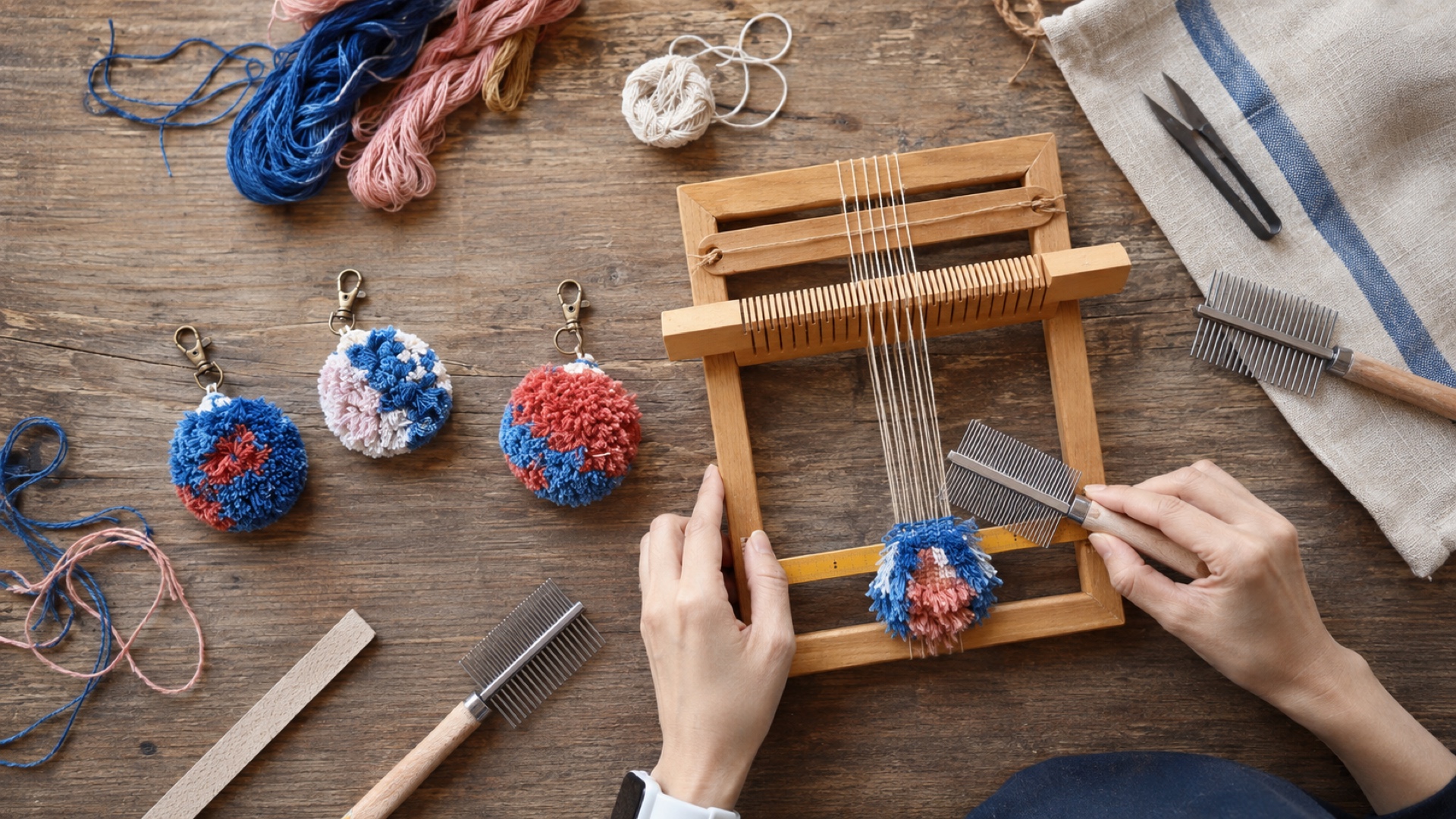
For one evening only, four makers from Okayama, Japan sit down with us to teach the first knots of Japanese hand-knotting.
Knotting is what it sounds like. A set of threads is held under tension on a frame, and short lengths of yarn are tied onto them one at a time. Thousands of knots make a rug. A few hundred make something small enough to carry. The pile is then cut back and combed until the surface comes level and the colour reads as one field rather than as separate strands.
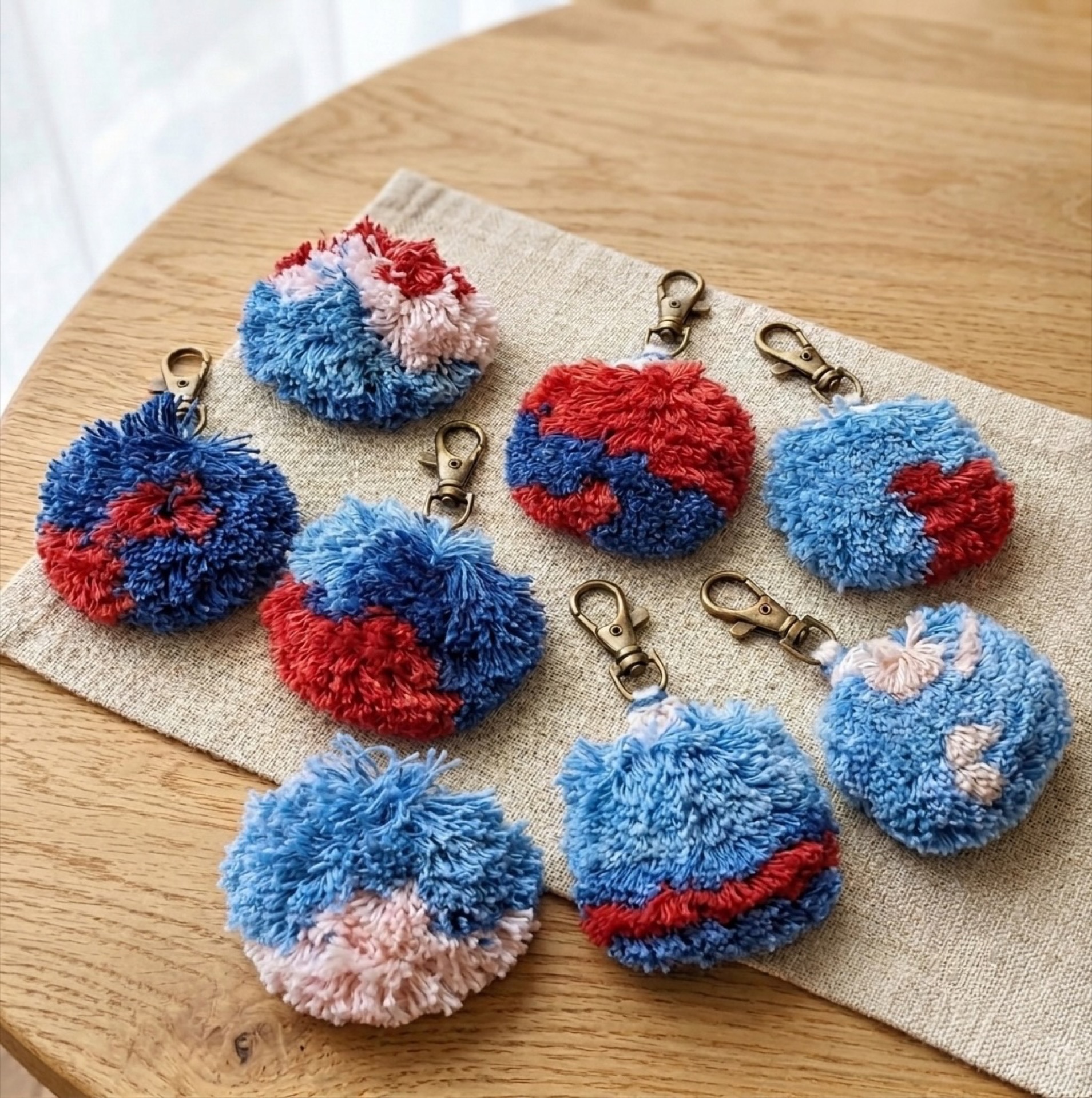
You will not make a rug — a rug takes months. You will make what a rug is made of. Working on a small frame loom that comes to you already warped, you tie tufts of plant-dyed cotton onto the threads one knot at a time, trim the pile level, comb it open until it turns to velvet, and finish the piece as a keyring or a brooch. It is about 5 × 5 cm, it is dense, and no two come out alike — the colour goes in one knot at a time and you decide where it goes.
The cotton did not start out as craft yarn. It is surplus from a canvas mill in Okayama, the region that makes most of Japan’s sailcloth, taken off the factory floor and dyed by hand with plants. It is spun fine and bundled several strands together, which is why the finished pile comes out soft rather than wiry.
The session is led by Noriko Yamanaka of Arts & Crafts Village in Okayama, with three colleagues assisting. With four makers in the room, almost nobody works alone.
No experience is necessary
Taught in Japanese with English interpretation
The instructor demonstrates the curved Japanese shears used to carve the pile
Take home the piece you make, the same night
The makers are in New York as guests of Loop of the Loom, whose exhibition of hand-knotted work, Japanese Craftswomen: Knotting Life and Art, runs in Dumbo through October 1. This is the only evening they are teaching in Manhattan.
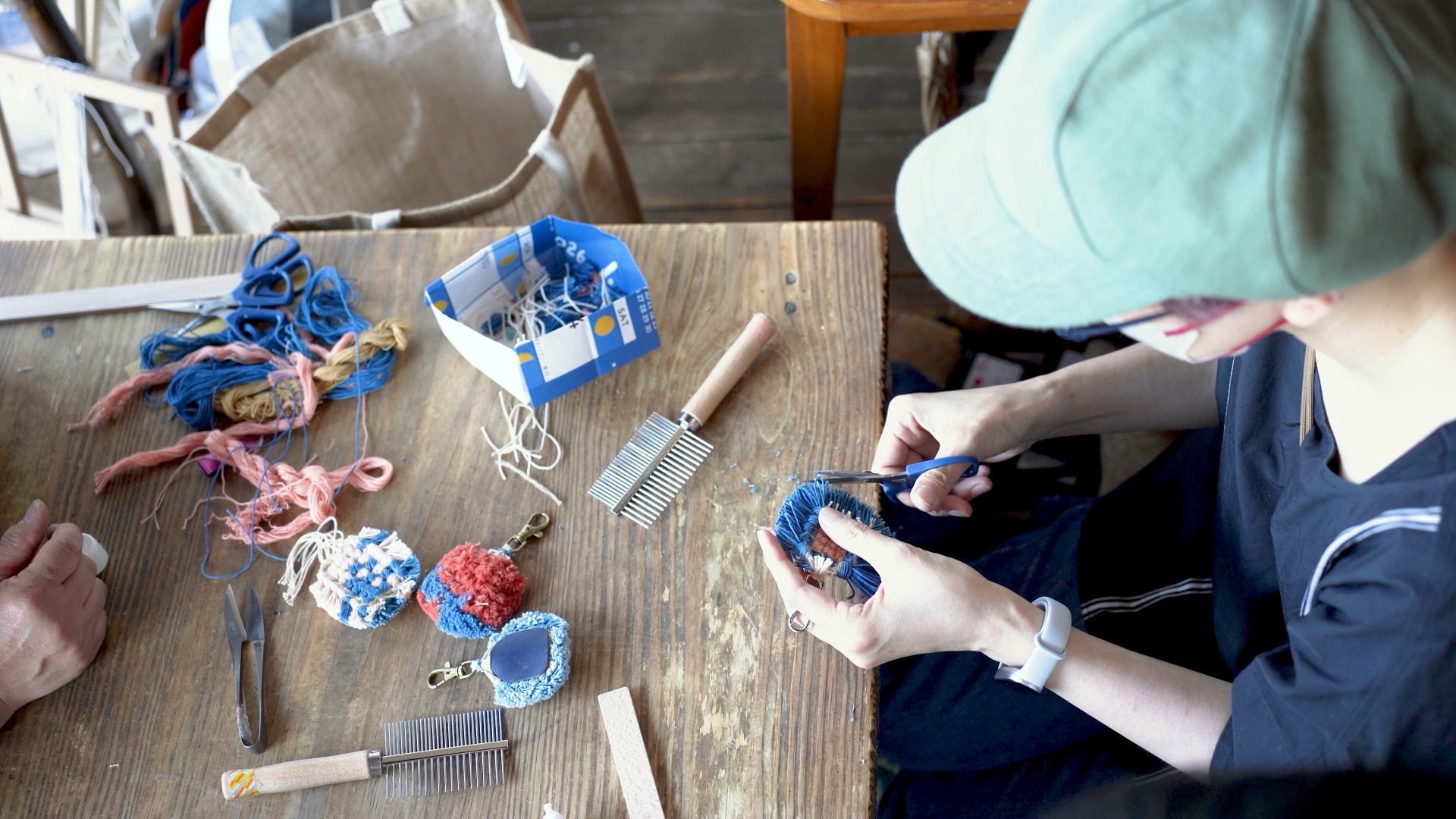
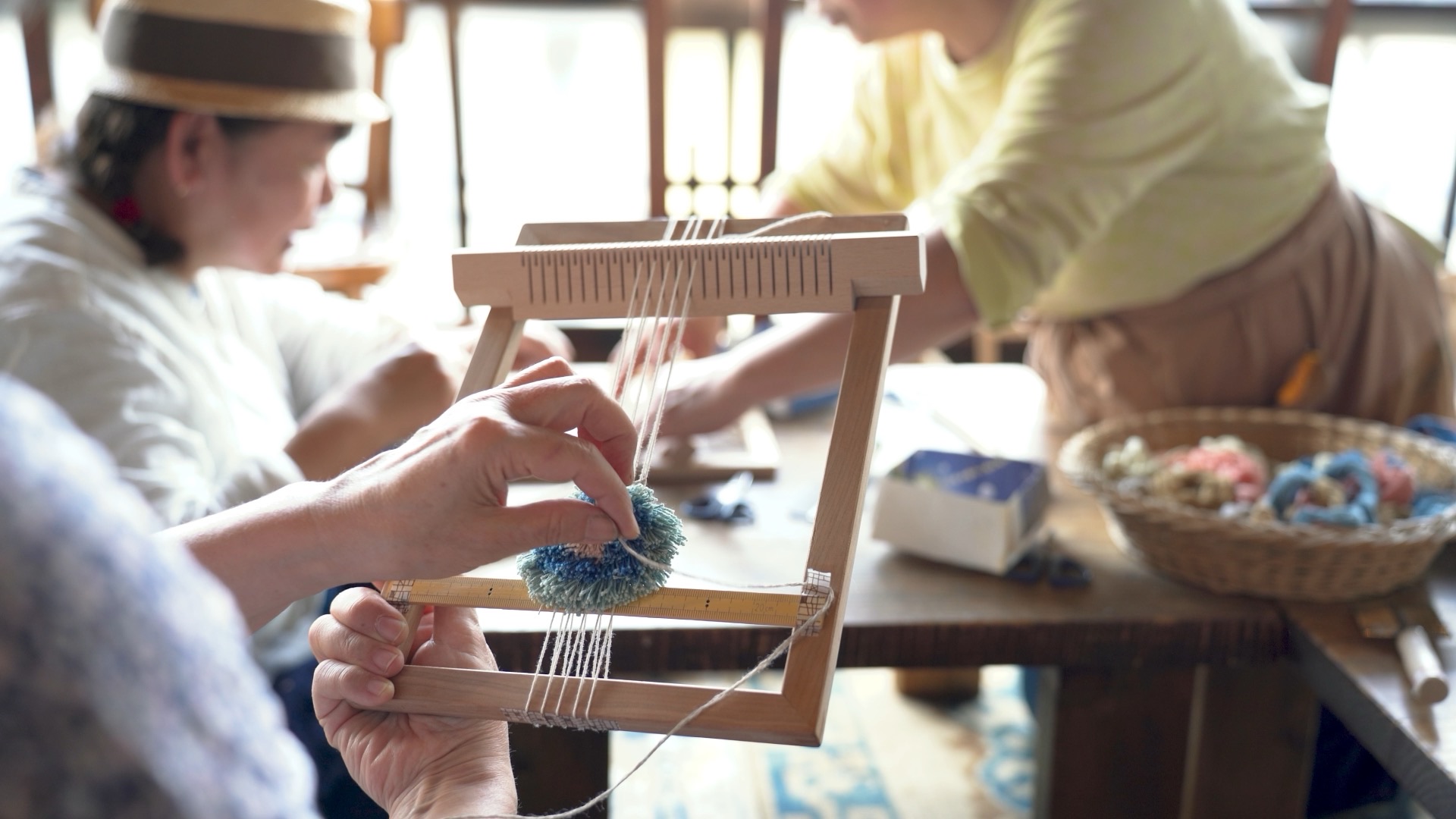
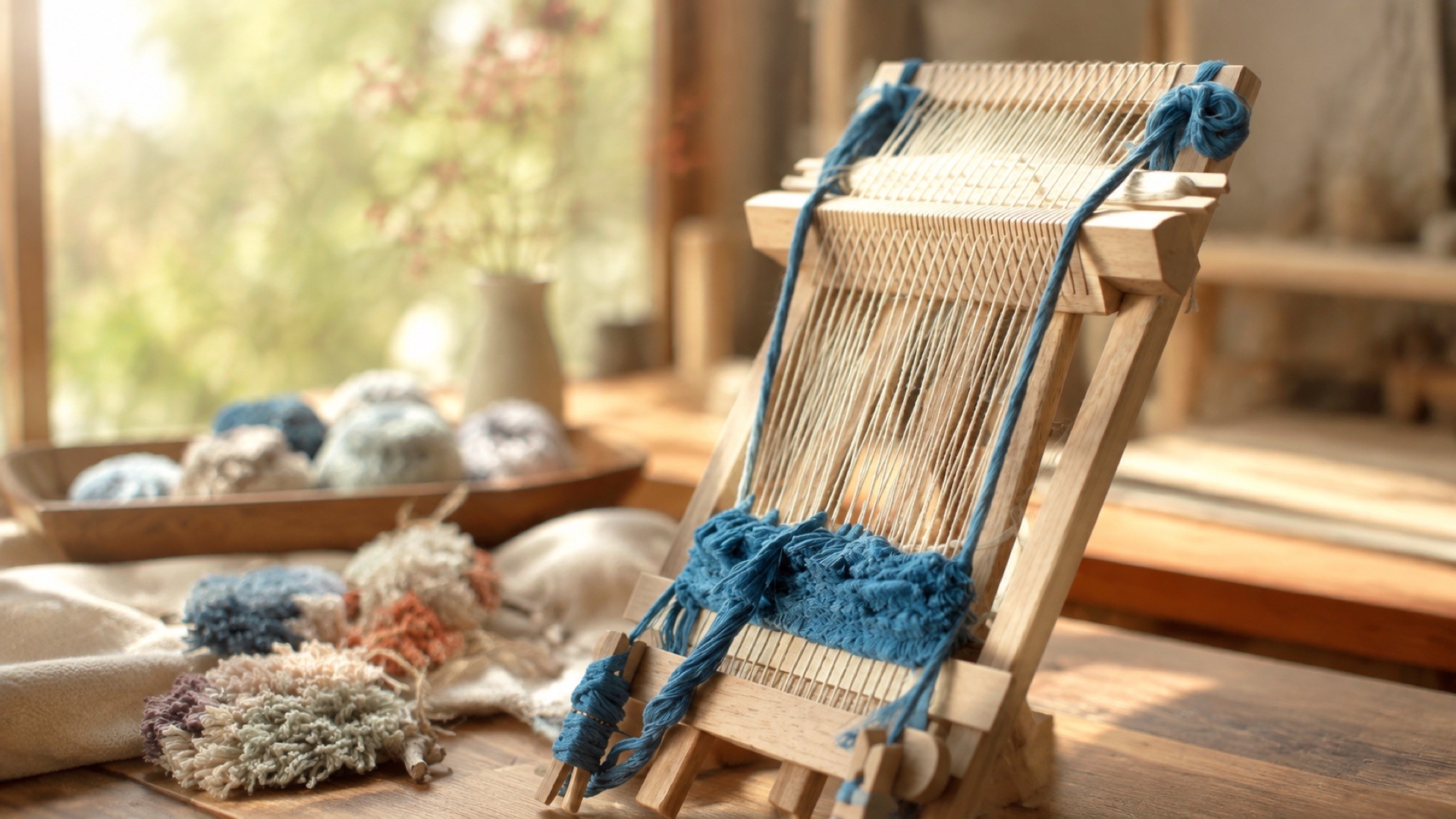
Filmed at a workshop by the same makers in Kyoto, Japan.
$90 / person
All materials and loom loan included
PLEASE NOTE: Registration closes 24 hours before the session. Cancellations made within 72 hours of the session are nonrefundable.