Kinpaku: Japanese Gold Leaf Class

Kanazawa gold leaf, laid by hand — design and take home your own pair of chopsticks

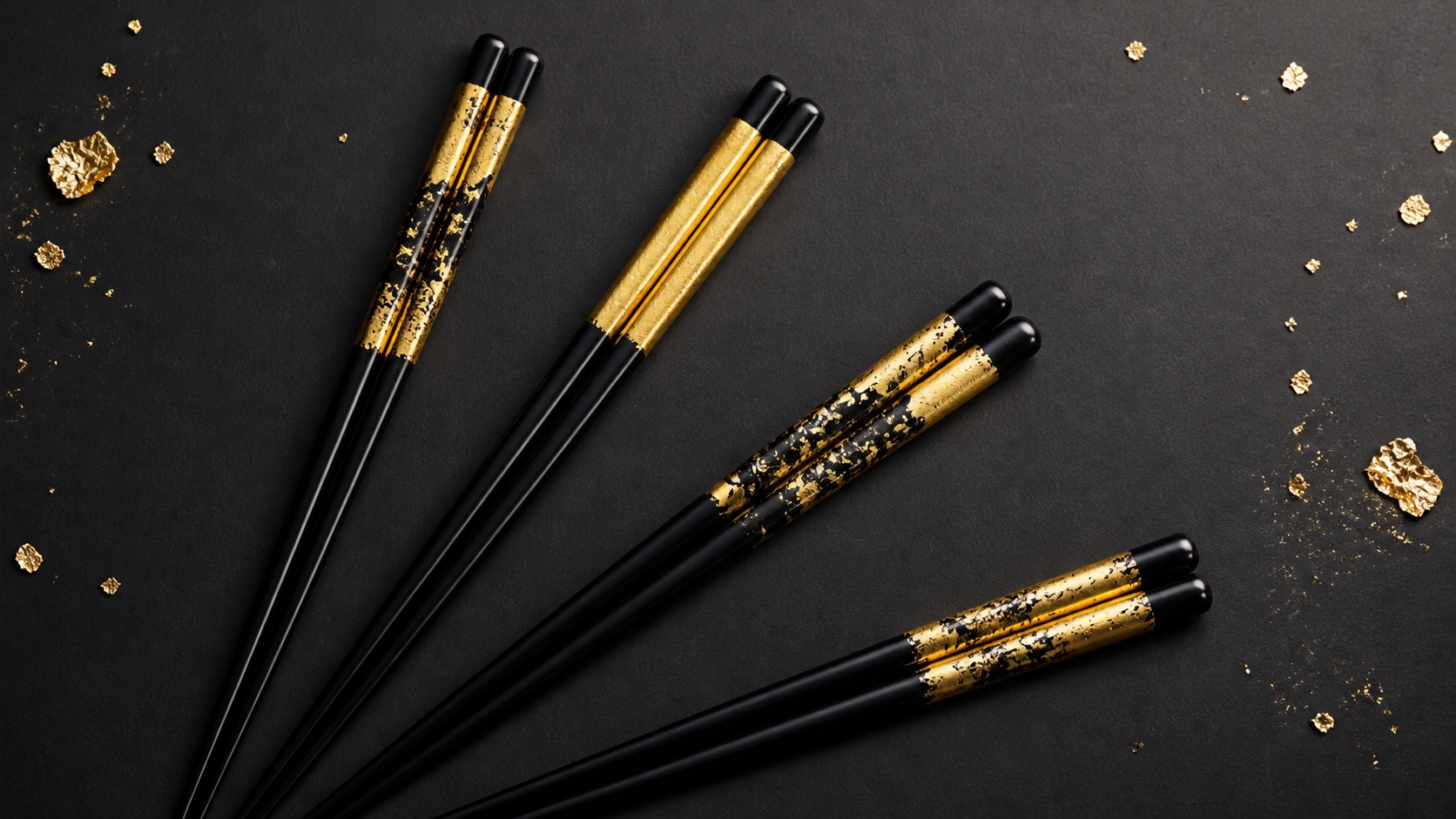
Four pairs of black chopsticks decorated with Kanazawa gold leaf in four different designs, on a dark background scattered with gold flakes

Kinpaku is Japanese gold leaf, beaten until it is one ten-thousandth of a millimetre thick — thin enough to lift on a breath, and light enough to disappear the moment a fingertip touches it. Almost all of it comes from one city: Kanazawa, where artisans have been beating gold for more than four hundred years.

In this hands-on class you will:
1. Learn where Kanazawa gold leaf comes from — its history, and how a lump of gold is melted, beaten and rested until it becomes a sheet you can see through
2. Handle the leaf yourself and pick up the artisans’ techniques for cutting it, crumpling it and laying it down
3. Design your own pair of chopsticks — a clean band of gold, cut shapes, scattered flakes, a spiral, or something nobody has tried yet — and apply the leaf your way

Your instructor seals each pair with a protective topcoat at the end, and you take home the chopsticks you designed, boxed. Gold leaf cannot be lifted once it is down, so every pair is a one-take piece and no two ever come out the same.

Beginner-friendly — no experience with gold leaf is needed. All materials are included.

PRICE

$70 / person

DURATION

2 hours

LOCATION

91 E 3rd Street, New York, NY 10003

Inside the class

A short, unhurried two hours. You will hear where the gold comes from and how it is made, then spend the rest of the class with the leaf in your hands — cutting, placing, pressing, and deciding for yourself what your chopsticks should look like.

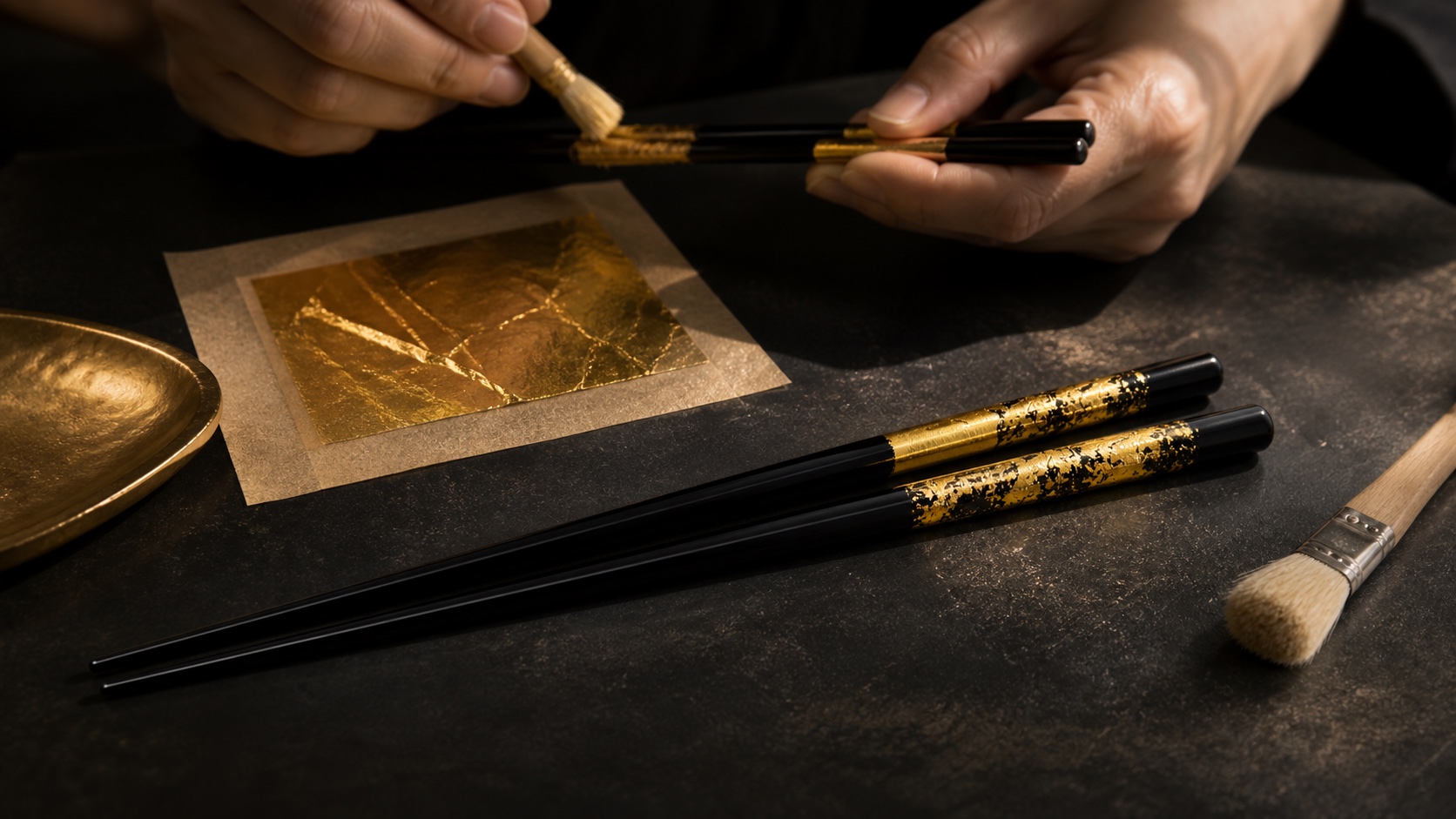
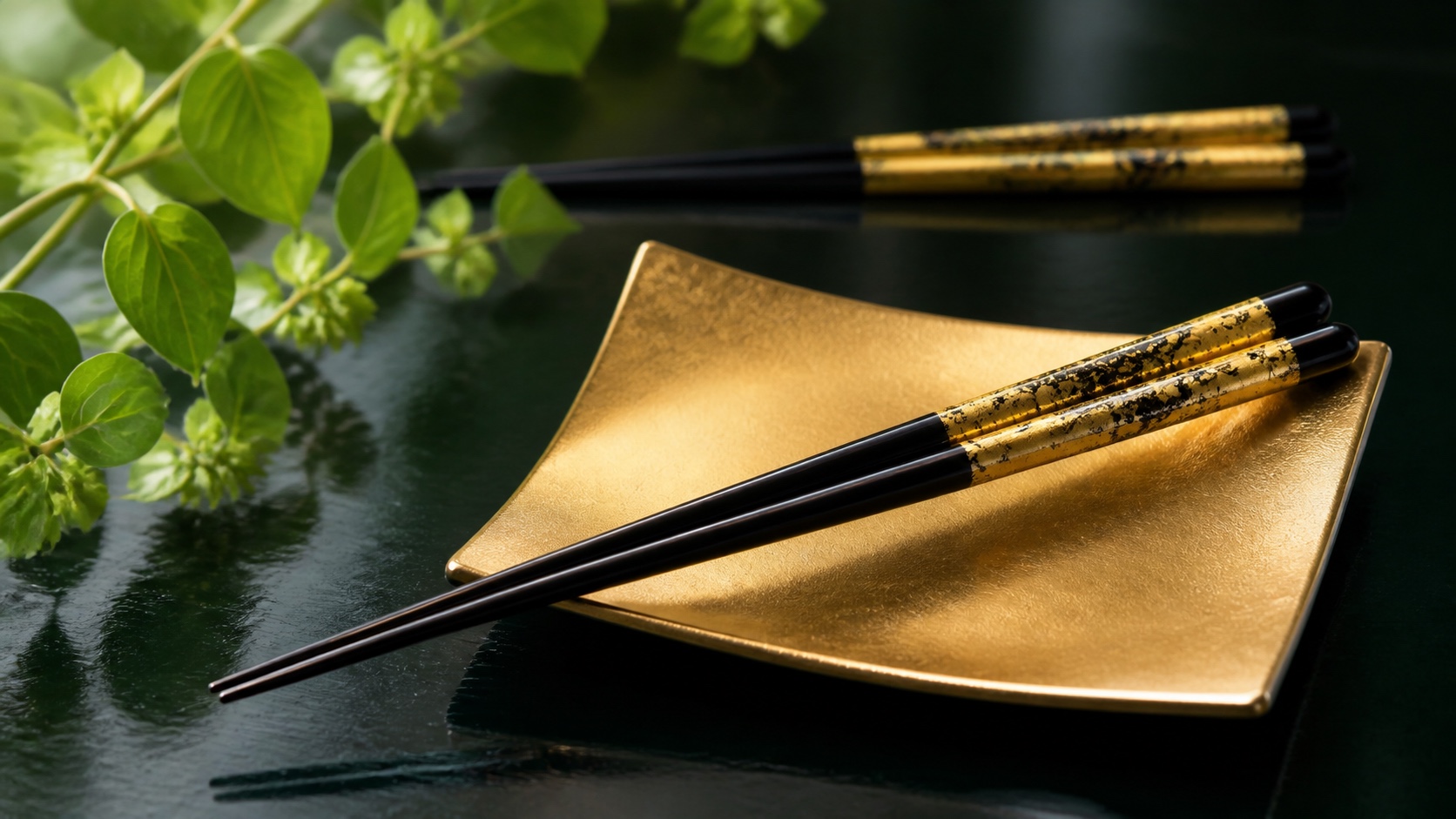
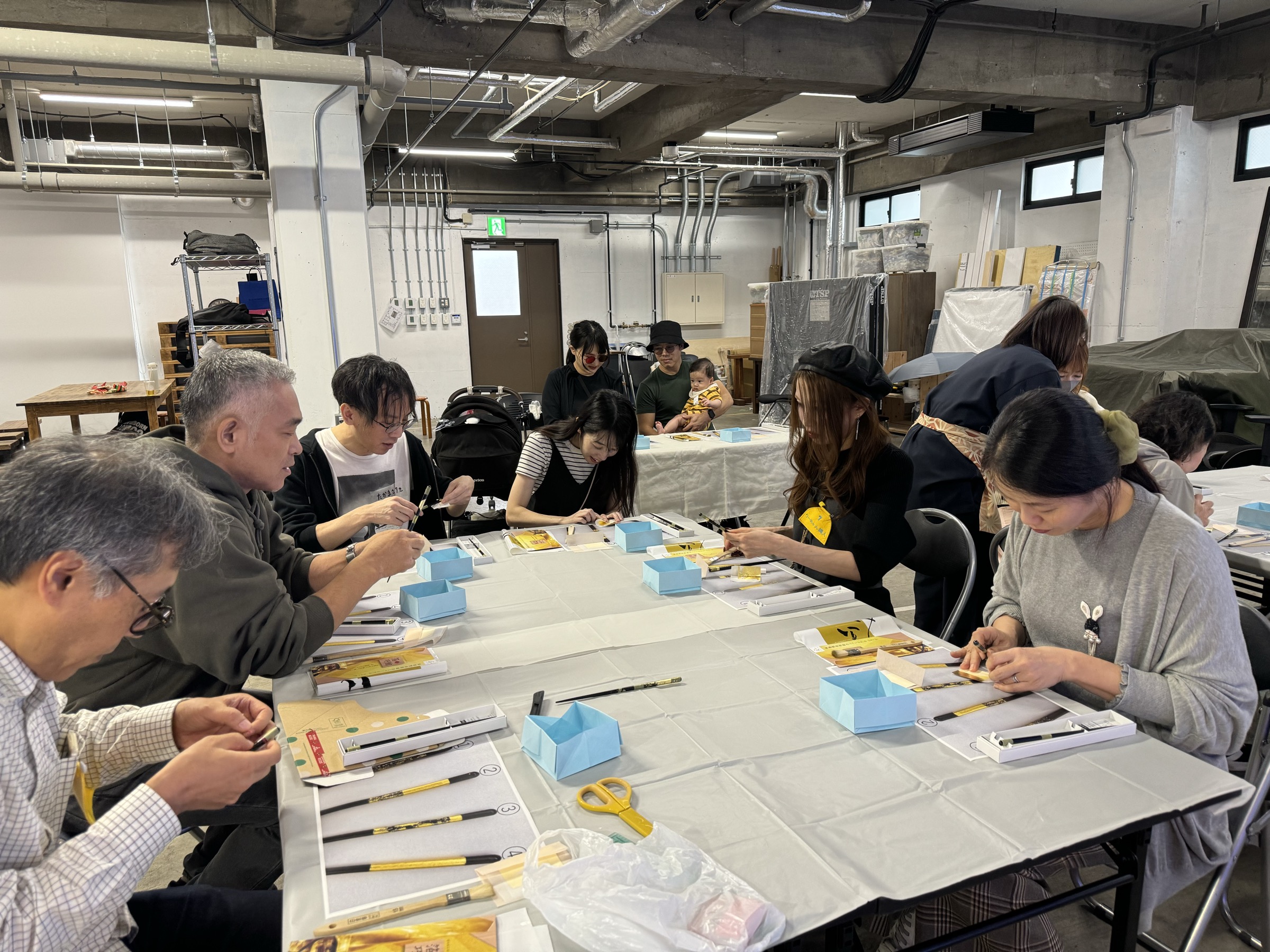
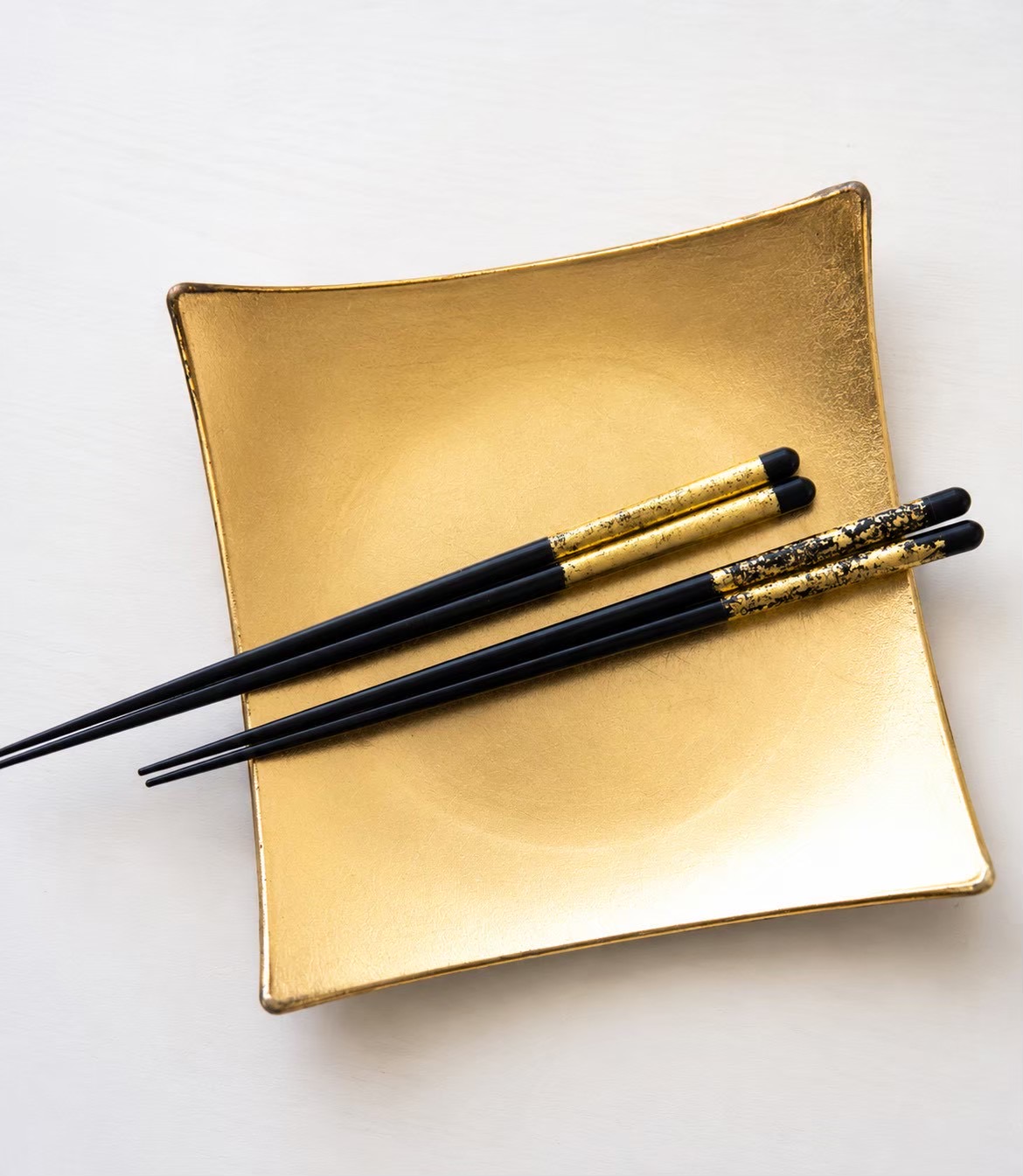
Hands pressing Kanazawa gold leaf onto a pair of black chopsticks with a soft brushA pair of gold-leaf chopsticks resting on a square gold-leaf dish beside green foliageParticipants applying gold leaf to their own chopsticks at a gold leaf workshop

Four ways to design yours

These are the four the artisans use. Combine them, layer them, or ignore all four and invent your own — that is the point of the class.

Flat

Cut the leaf to the width you want, then roll the chopstick along it for a clean, solid band of gold.

Shapes

Cut the leaf into stars, hearts, dots — whatever you like — and press the pieces on one by one.

Scattered

Crumple the leaf between your palms until it breaks into fine flakes, then dust them across the surface.

Spiral

Cut a narrow strip and wind it around the stick. The angle you hold it at decides how wide the spiral runs.

What you take home

One pair of chopsticks, designed by you, sealed and boxed — ready to give away or to keep. Let them rest a couple of days before their first meal.

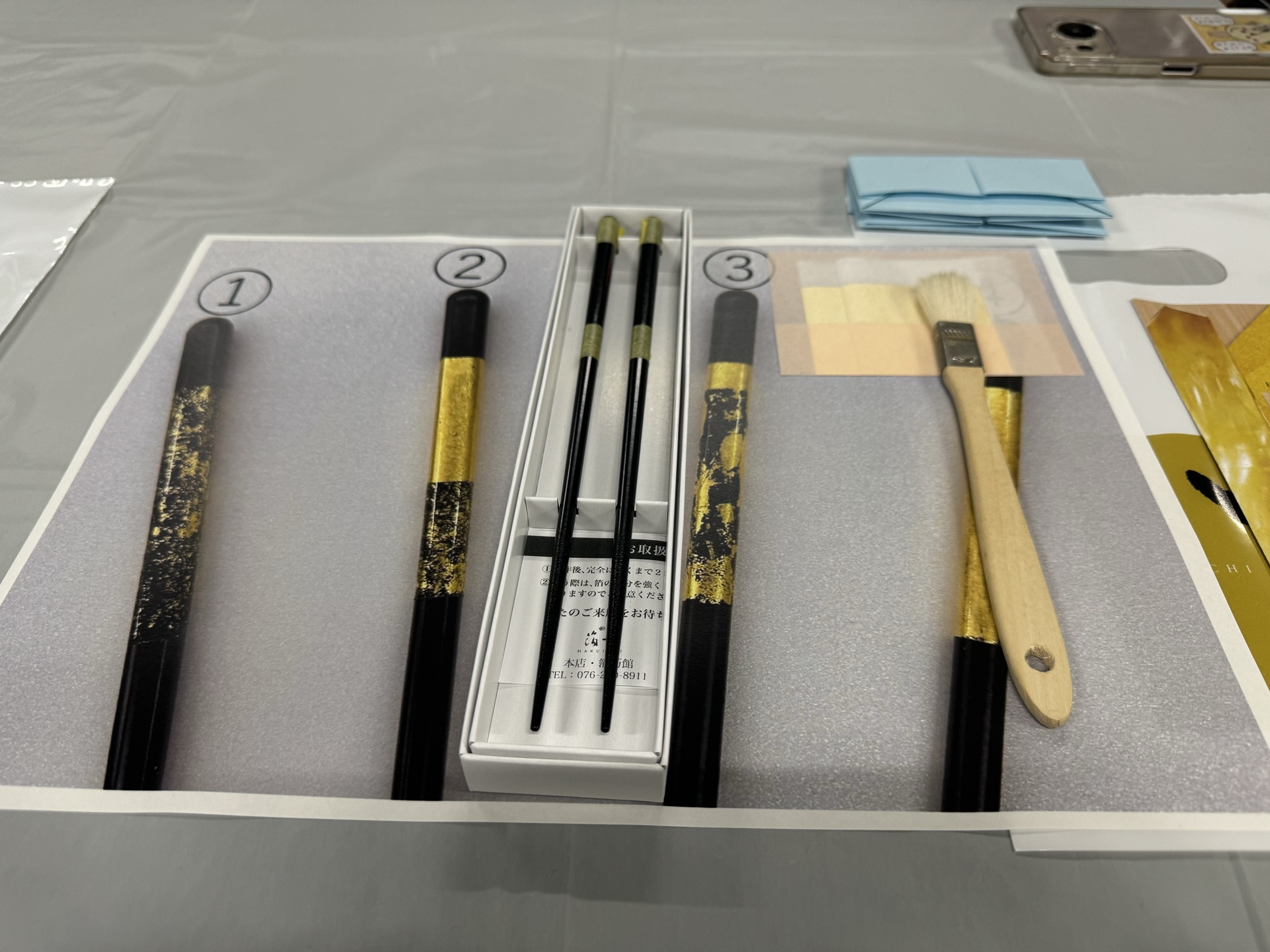
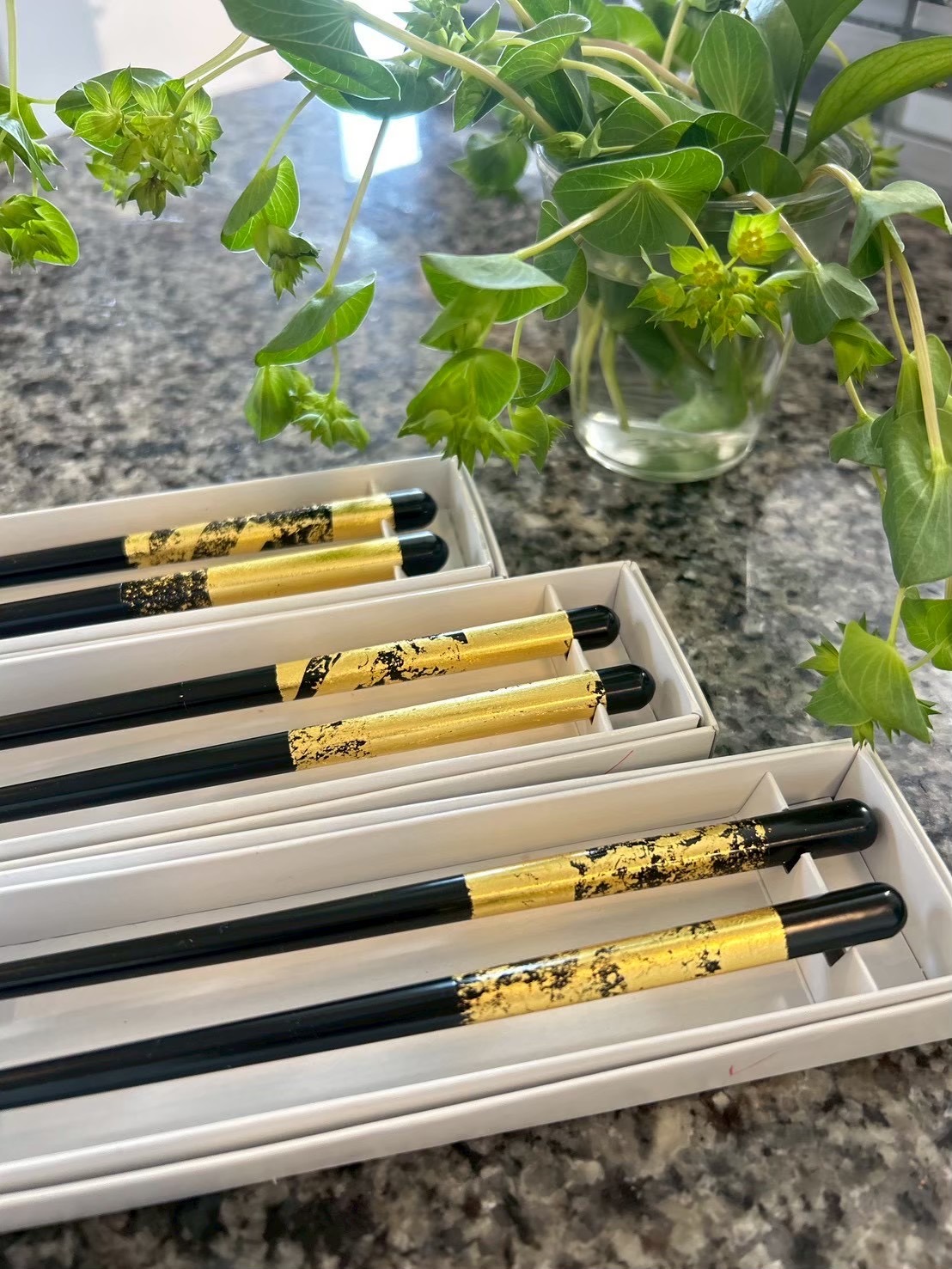
The gold leaf kit laid out on the table: three sample designs, a boxed pair, a brush and sheets of gold leafTwo pairs of chopsticks with different gold leaf designs laid across a square gold-leaf dishThree boxed pairs of chopsticks decorated with gold leaf, each with a different design

Good to know

  • Gold leaf sticks to skin on contact, so you will work with the backing paper, scissors and a brush rather than bare fingers. The instructor will show you how.
  • Once the leaf is down it cannot be removed — part of why each pair is one of a kind.
  • Finished chopsticks are not dishwasher or dryer safe, and should rest a couple of days before you eat with them.

Private and group sessions are available upon request. For inquiries, please email us at class@resobox.com. Planning a team or group event? Learn more about our corporate & group workshops.

About the Instructor

Hideko Koyama, instructor of the Kanazawa gold leaf class at RESOBOX

Hideko Koyama

Hideko Koyama grew up in Nanao, in Ishikawa — the same prefecture as Kanazawa — among household Buddhist altars finished in gold leaf and metalwork. She studied Japanese literature, history and culture, lived in Kansai, Kanazawa, London and Tokyo, and has spent the last thirty years in the New York area. She fell for Kanazawa gold leaf after taking a class at Hakuichi in Kanazawa, and now leads workshops to share it with people outside Japan.
Have a question? Ask me!