Kumiko Woodworking: Japanese Joinery Class

Traditional Japanese lattice-work, assembled by hand — no nails, no glue

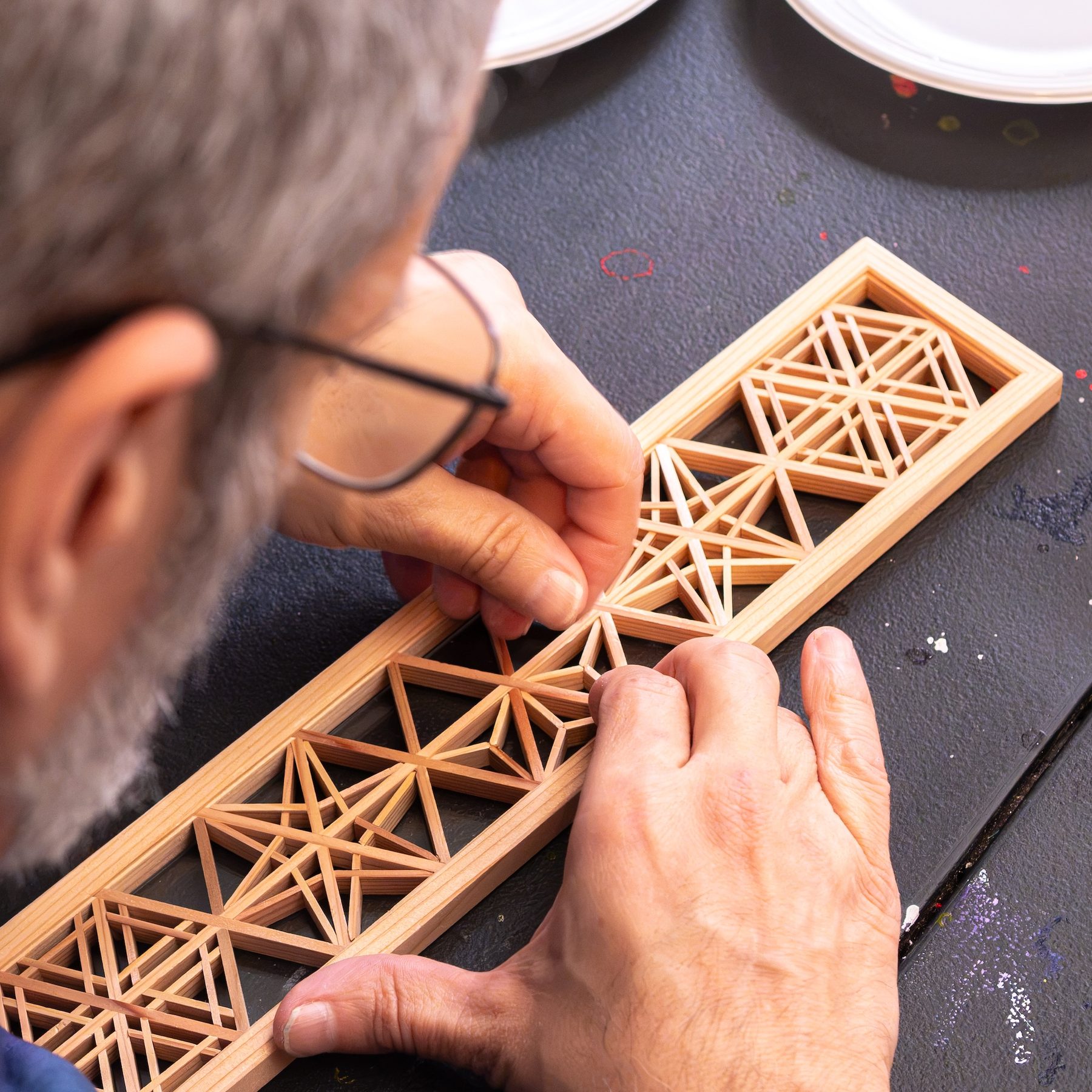
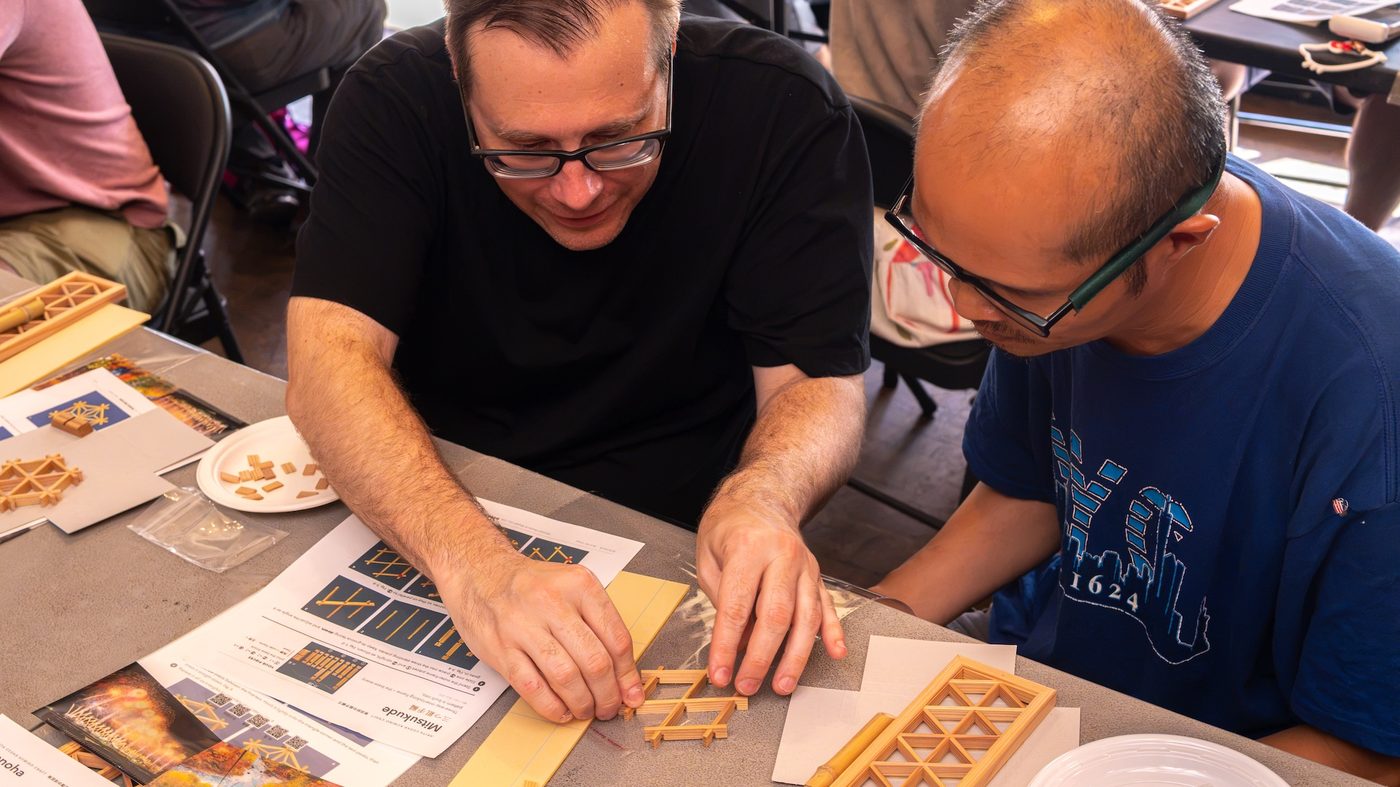
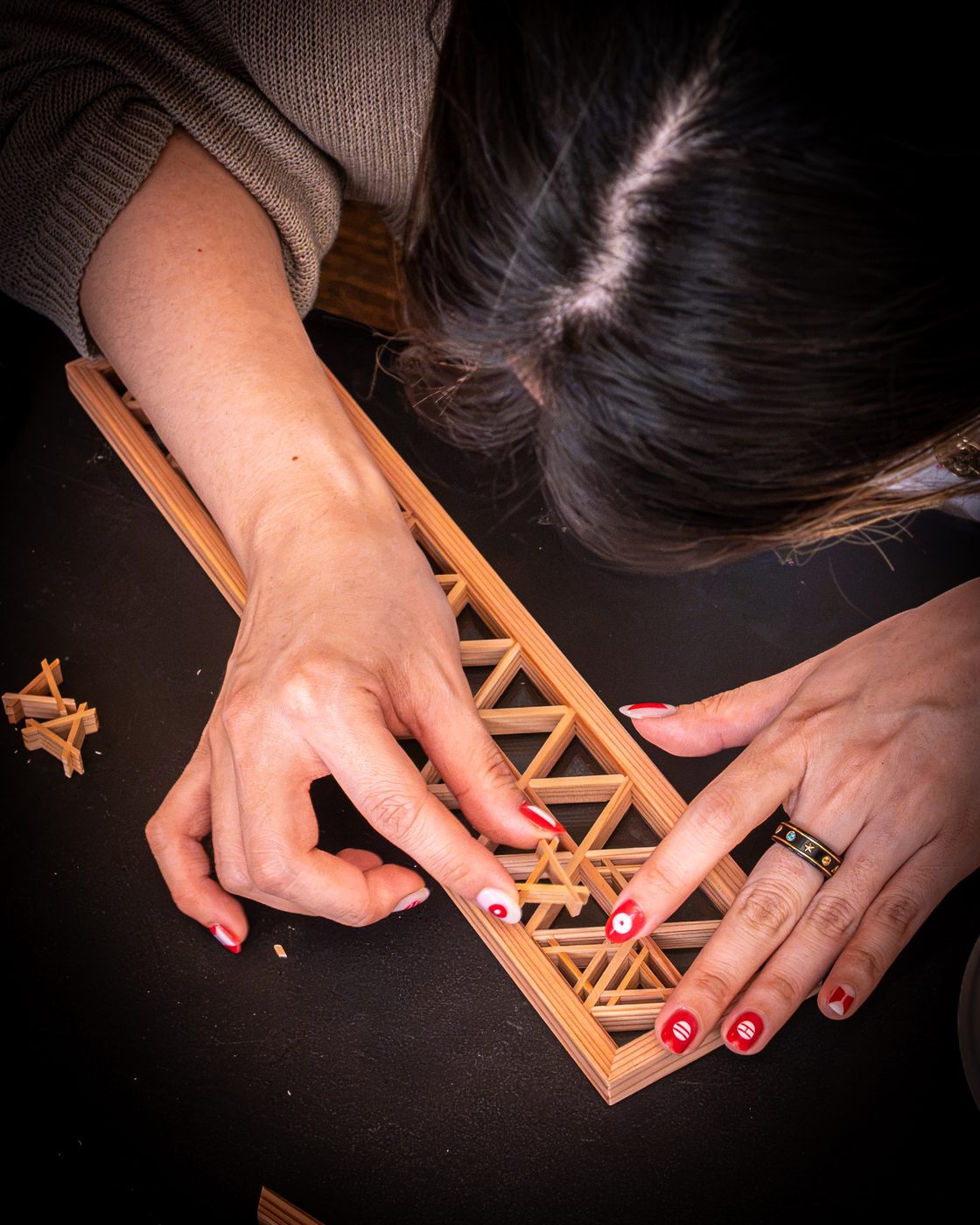
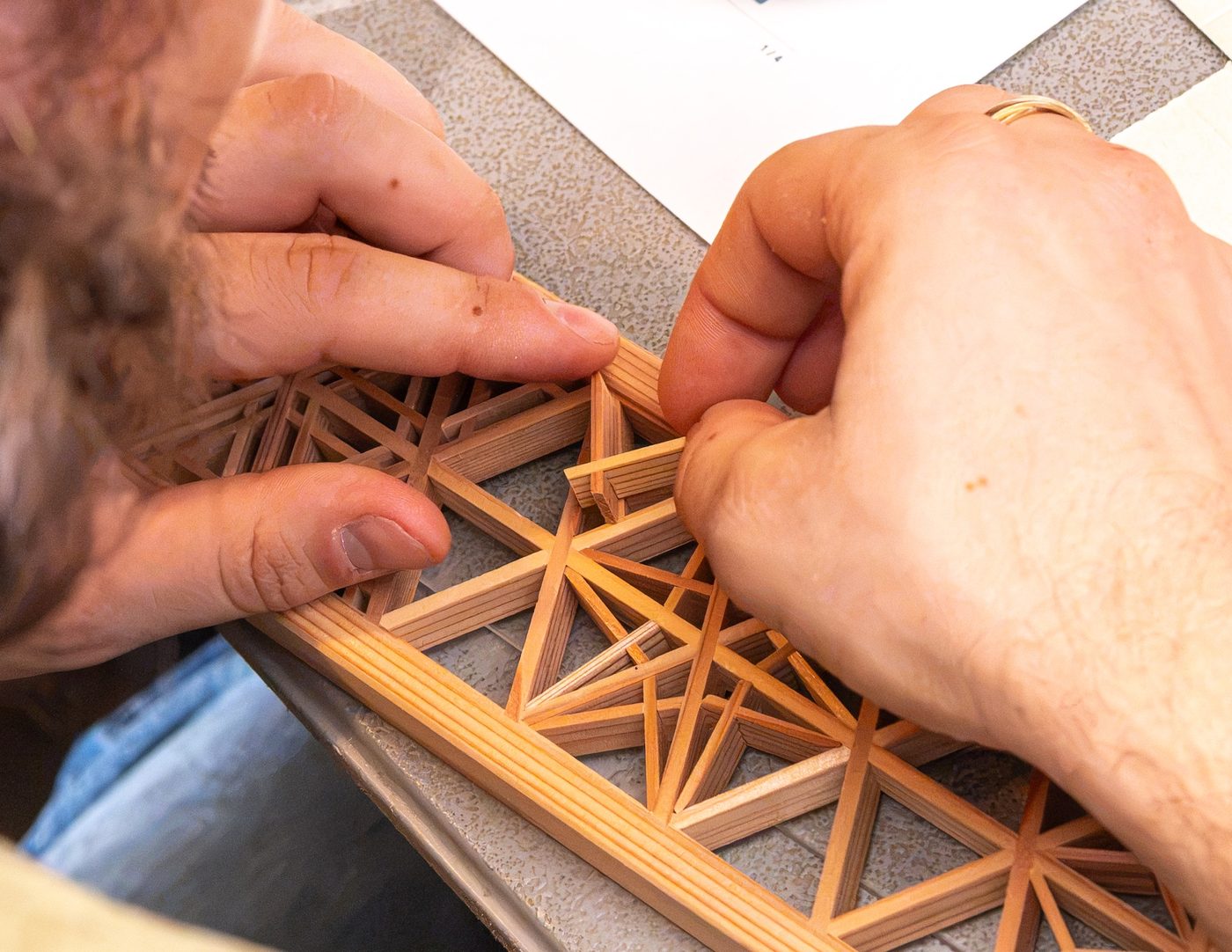
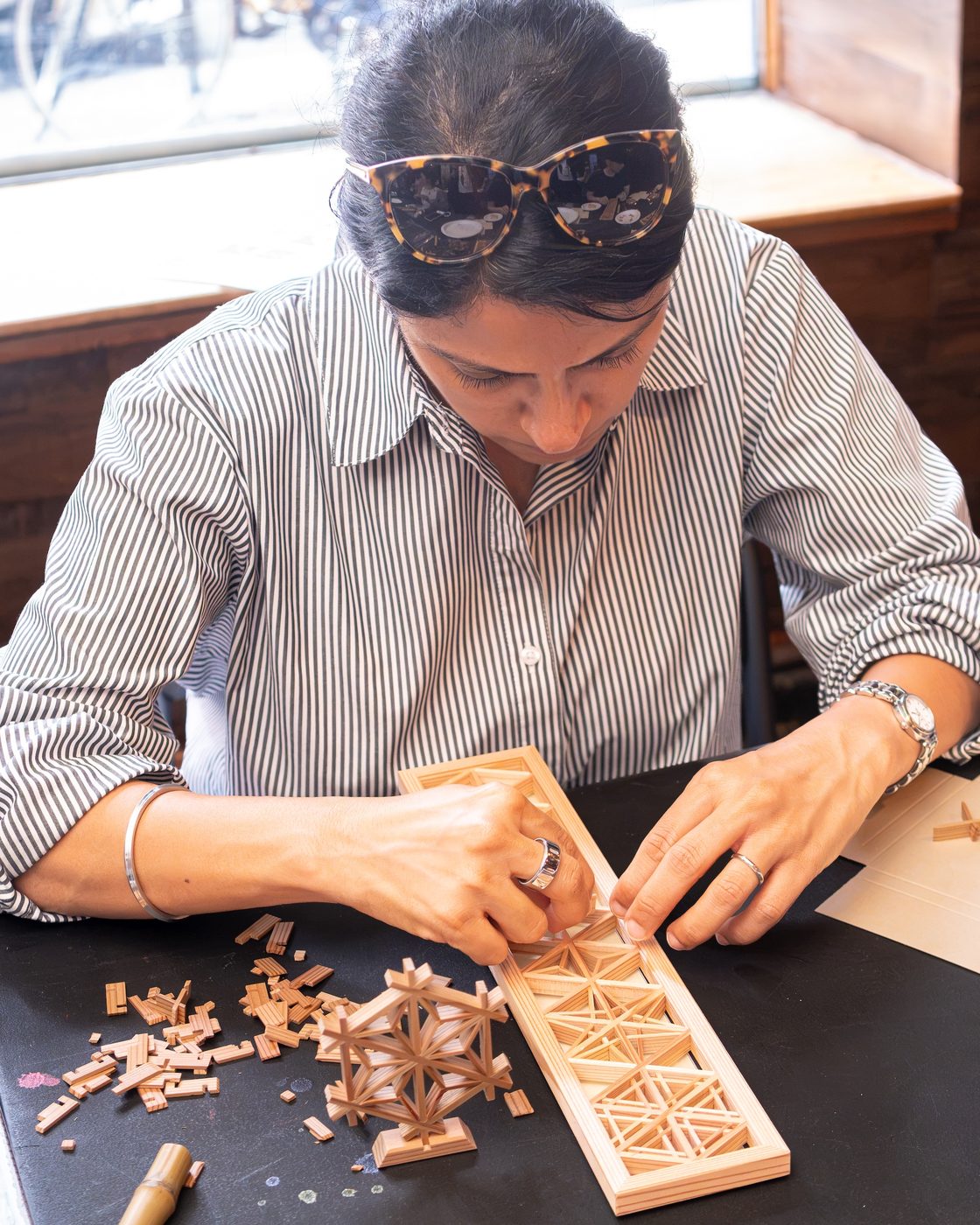
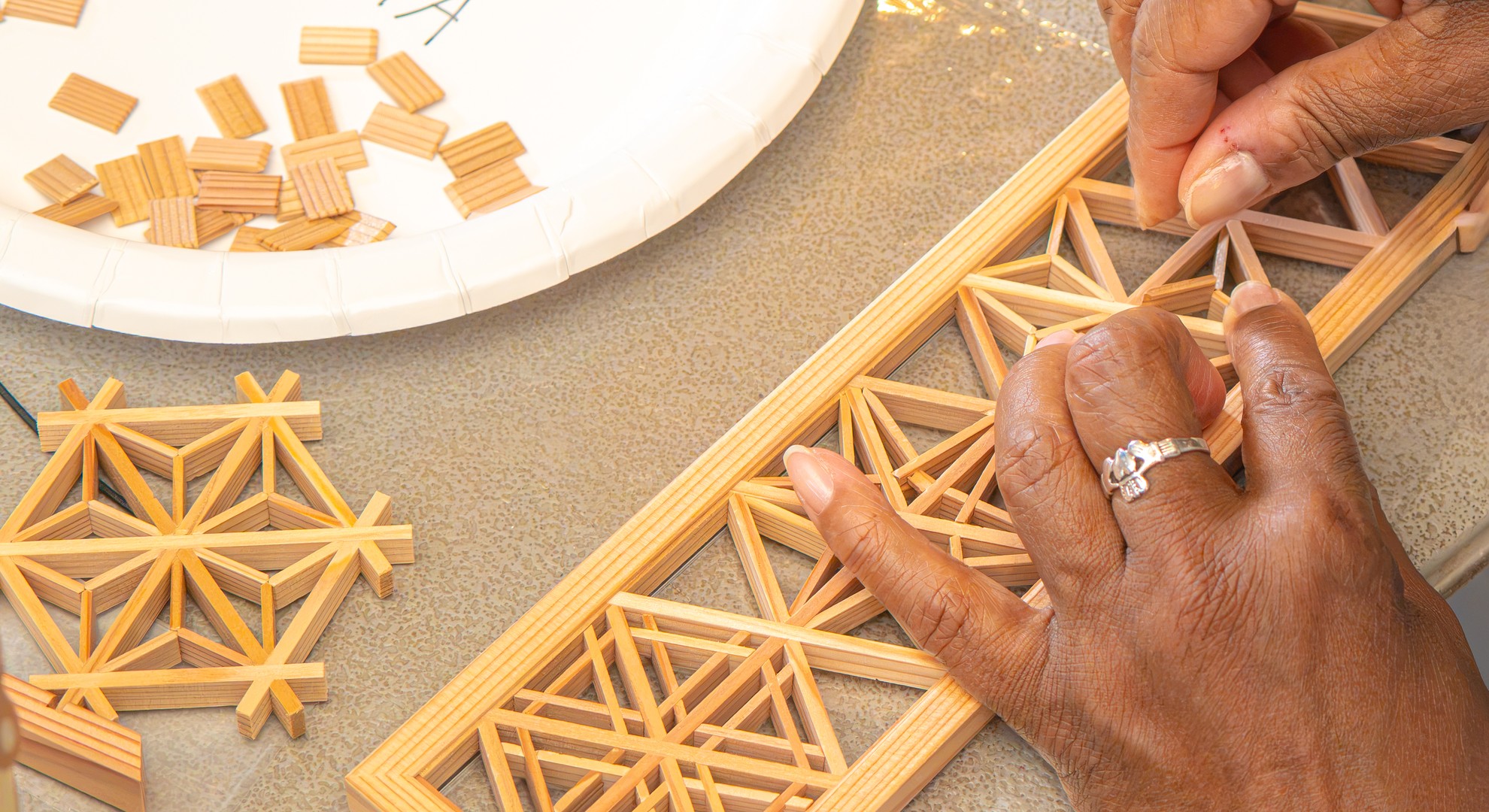
Close-up of hands assembling an asa-no-ha kumiko pattern beside a finished lattice piece at a kumiko woodworking class at RESOBOX in New York City

Kumiko is the traditional Japanese art of assembling delicate wooden lattices without nails or glue. Each piece is cut so precisely that the pattern holds together through fit alone — a technique refined over centuries, still gracing shoji screens and fine interiors across Japan.

In this hands-on class you will:
1. Discover what kumiko is — its history and how it works
2. Practice all three foundation patterns: asa-no-ha (hemp leaf), rindō (gentian), and goma (sesame) — building each one in the same practice frame, then taking it apart to try the next
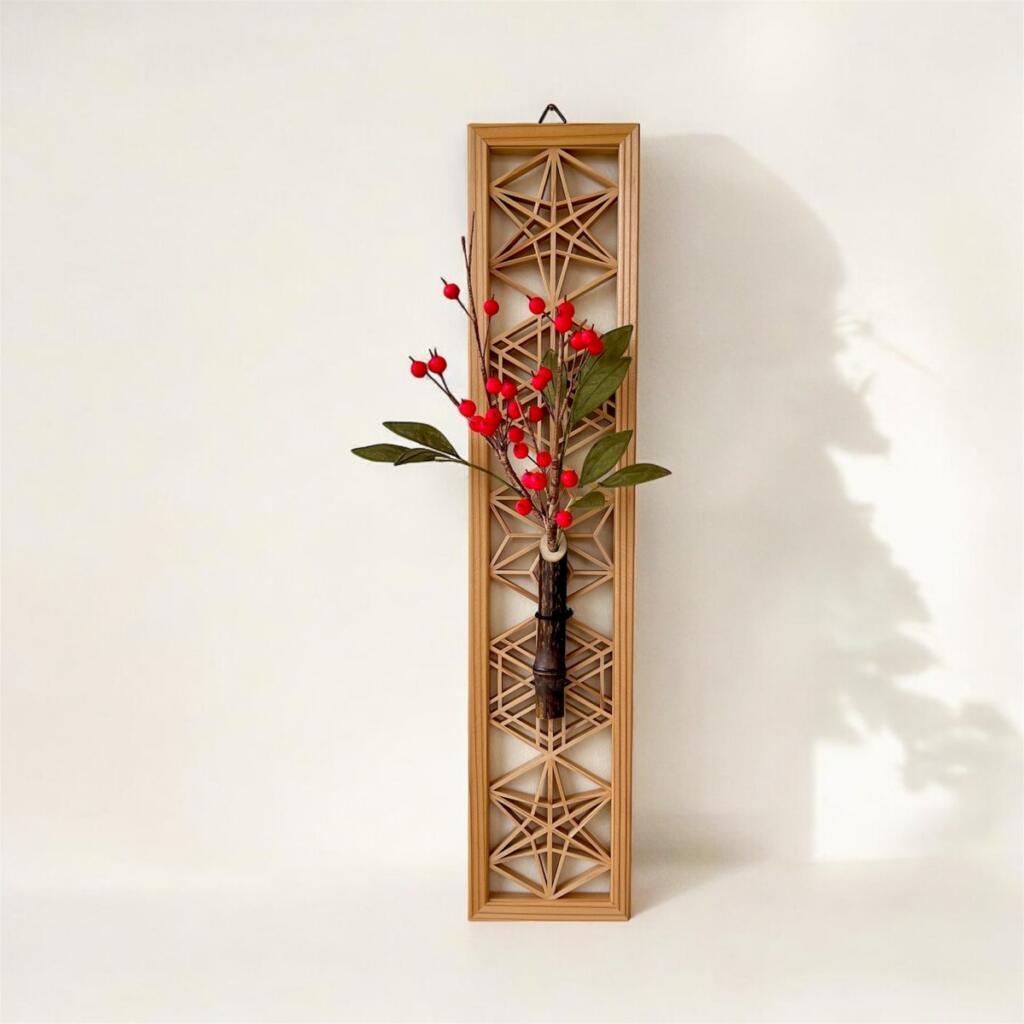
3. Use what you have learned to design your own arrangement inside the ichirin-zashi flower vase

All kits are handcrafted by Ōminato Bunkichi Shoten, a kumiko atelier in Kamo, Niigata, working in wood since the Meiji era. No experience needed — when a piece fits just right, it slides smoothly into place. Your instructor will guide you through the correct order, the gentle touch, and the small tricks the artisans use.

Beginner-friendly. All materials included. The practice frame stays in the studio, so everything you learn goes into the one piece you take home: the ichirin-zashi flower vase you designed yourself.

PRICE

$80 / person

DURATION

1.5 hours

LOCATION

91 E 3rd Street, New York, NY 10003

Inside the class

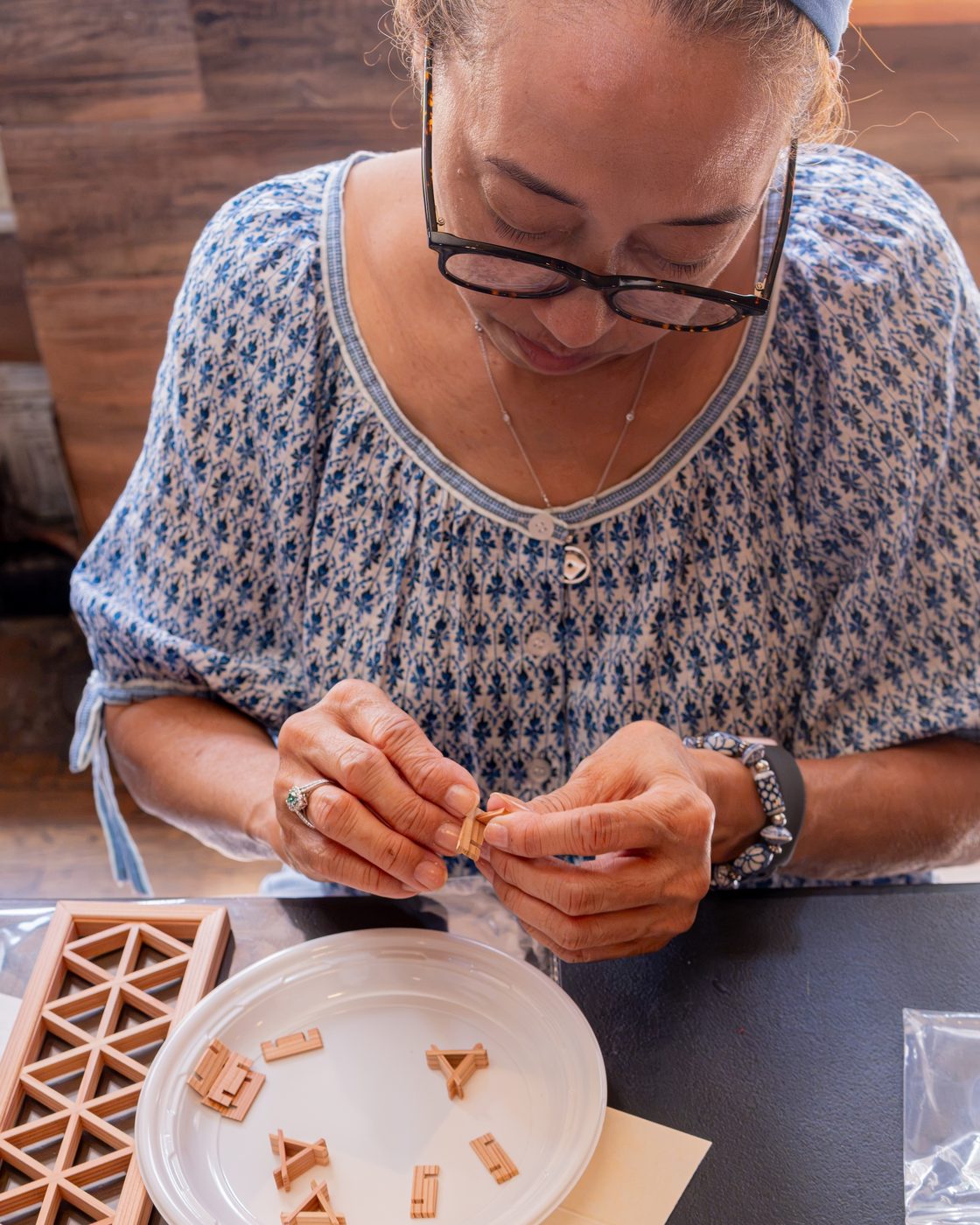
A quiet, focused hour and a half. You work at your own pace, the instructor comes round, and the lattice slowly takes shape under your hands — no nails, no glue, no rushing.

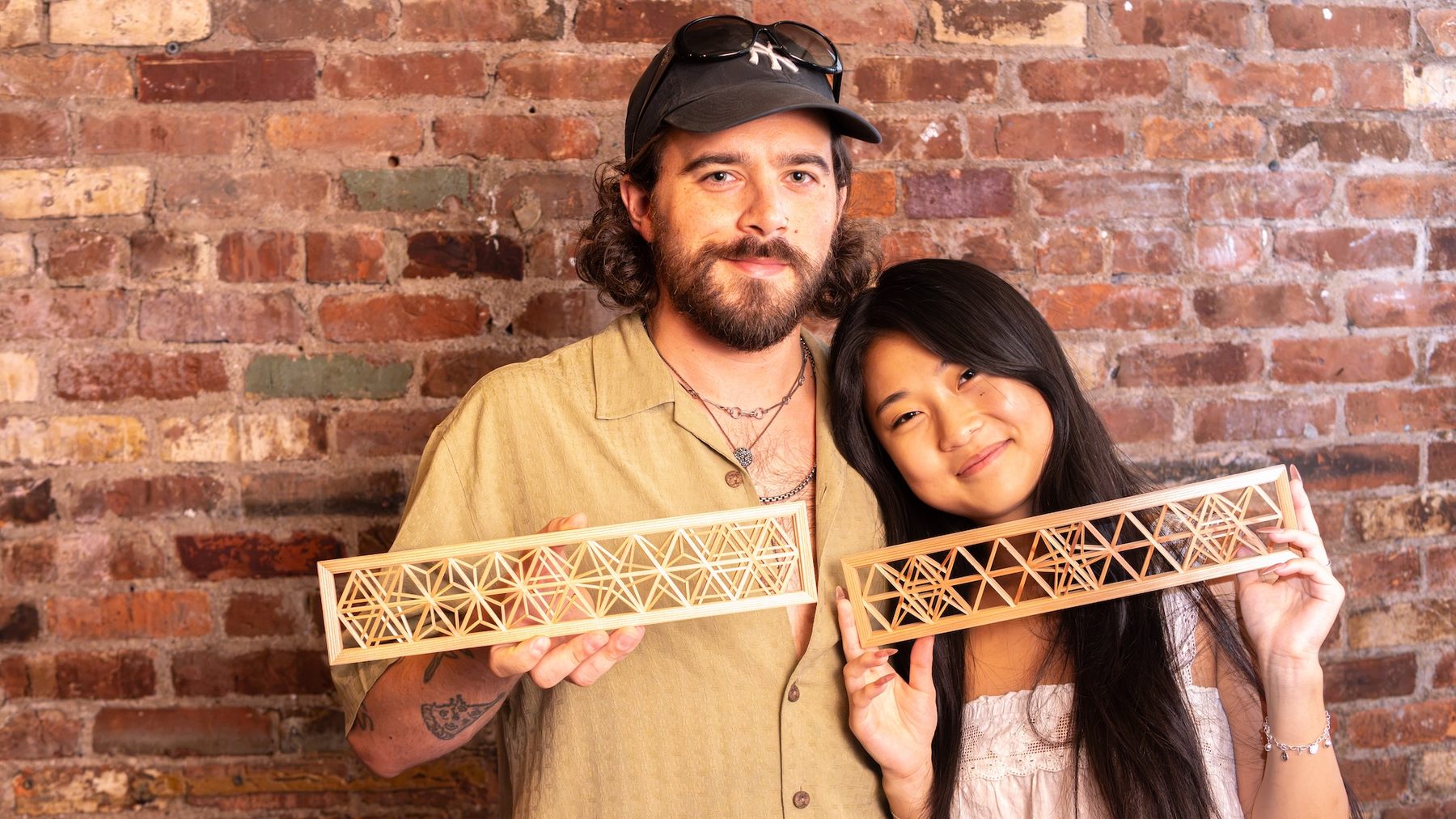
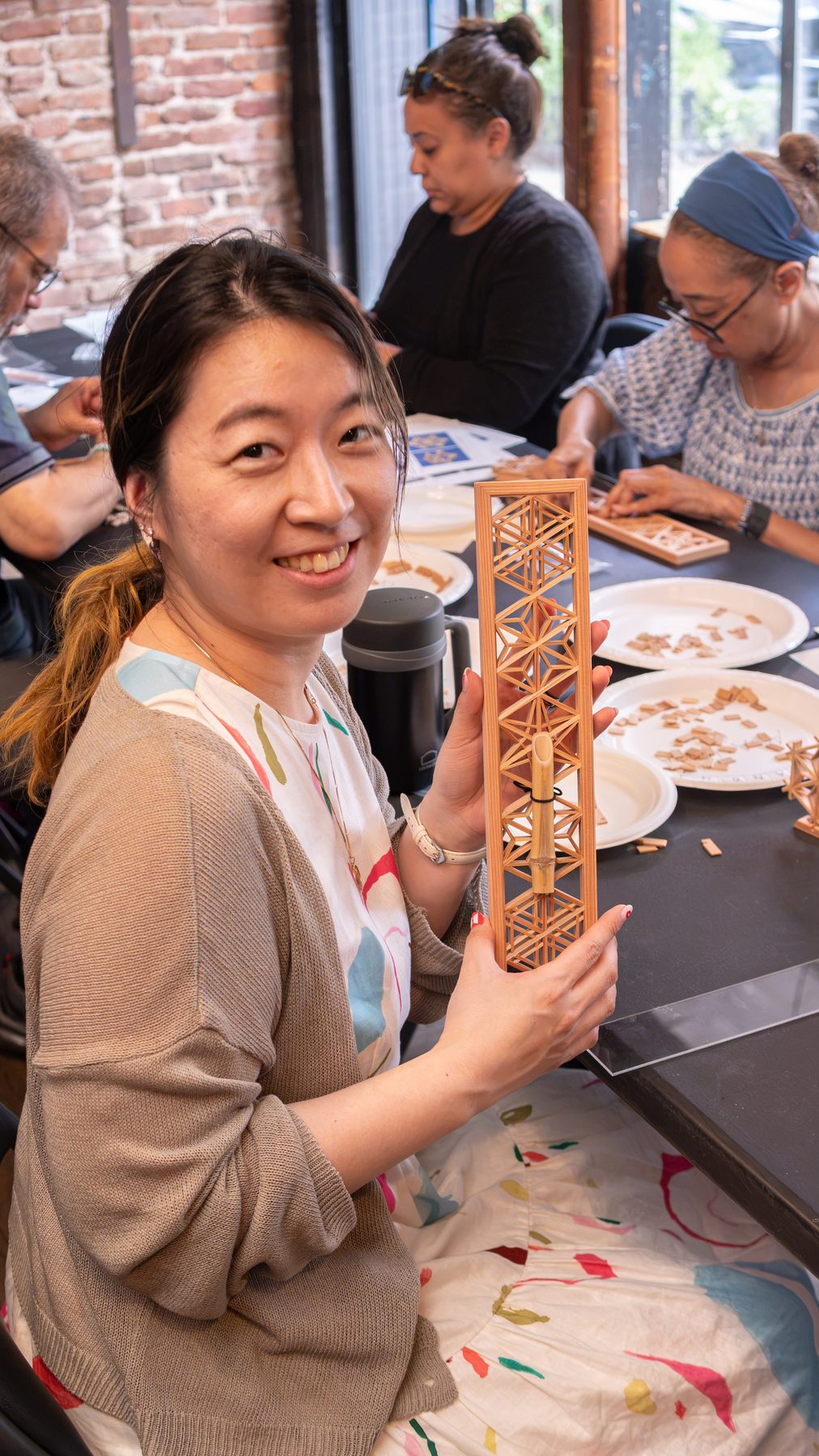
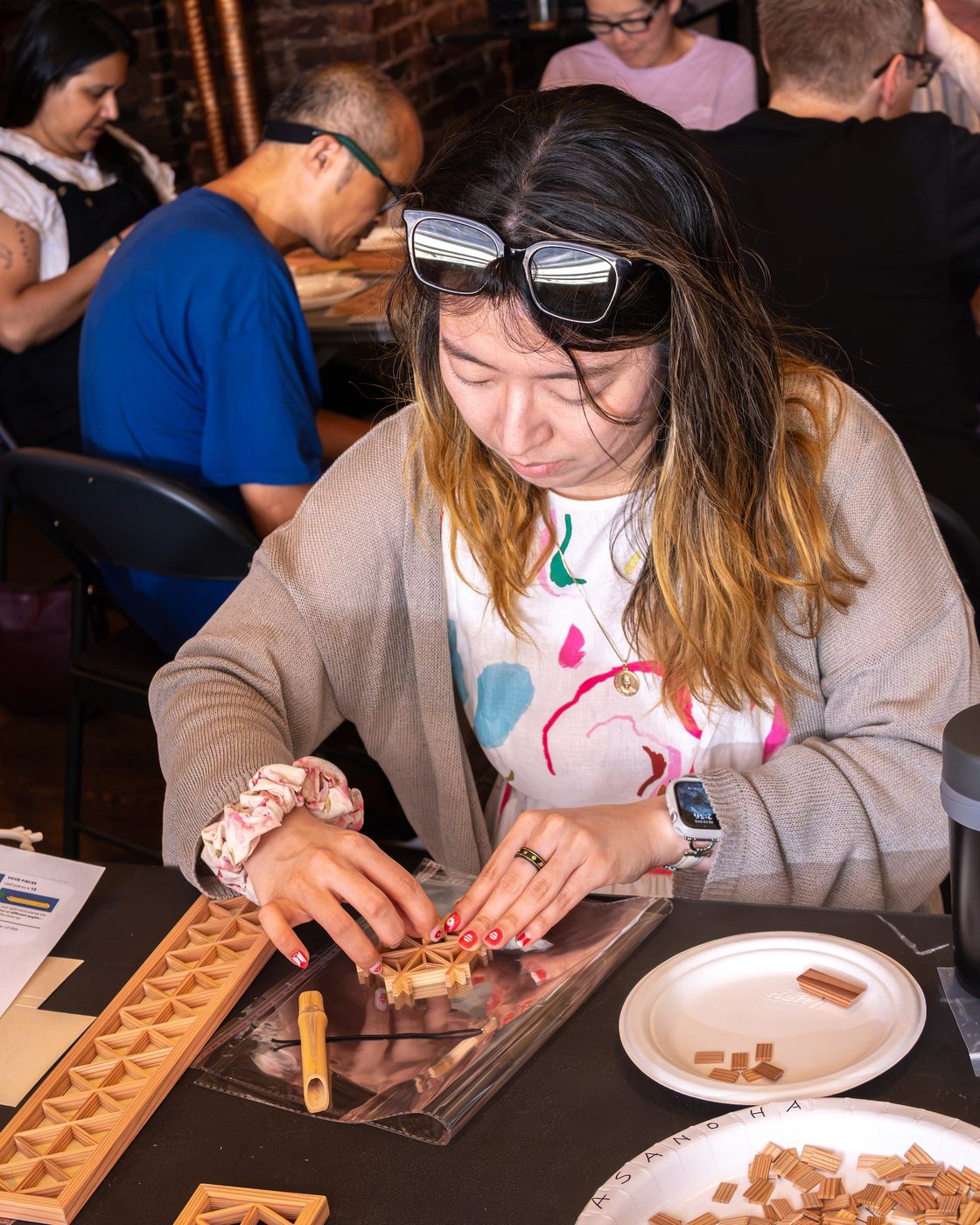
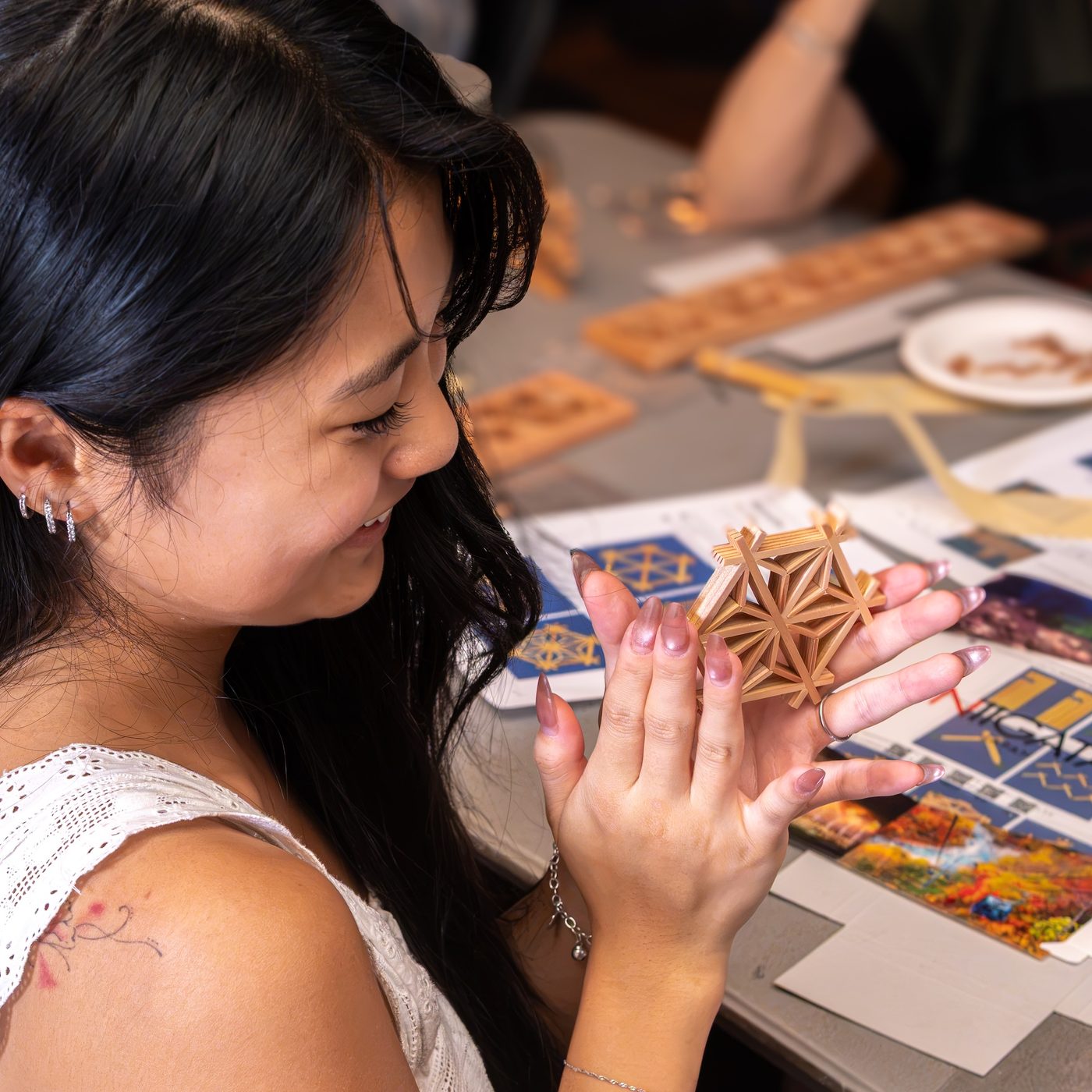
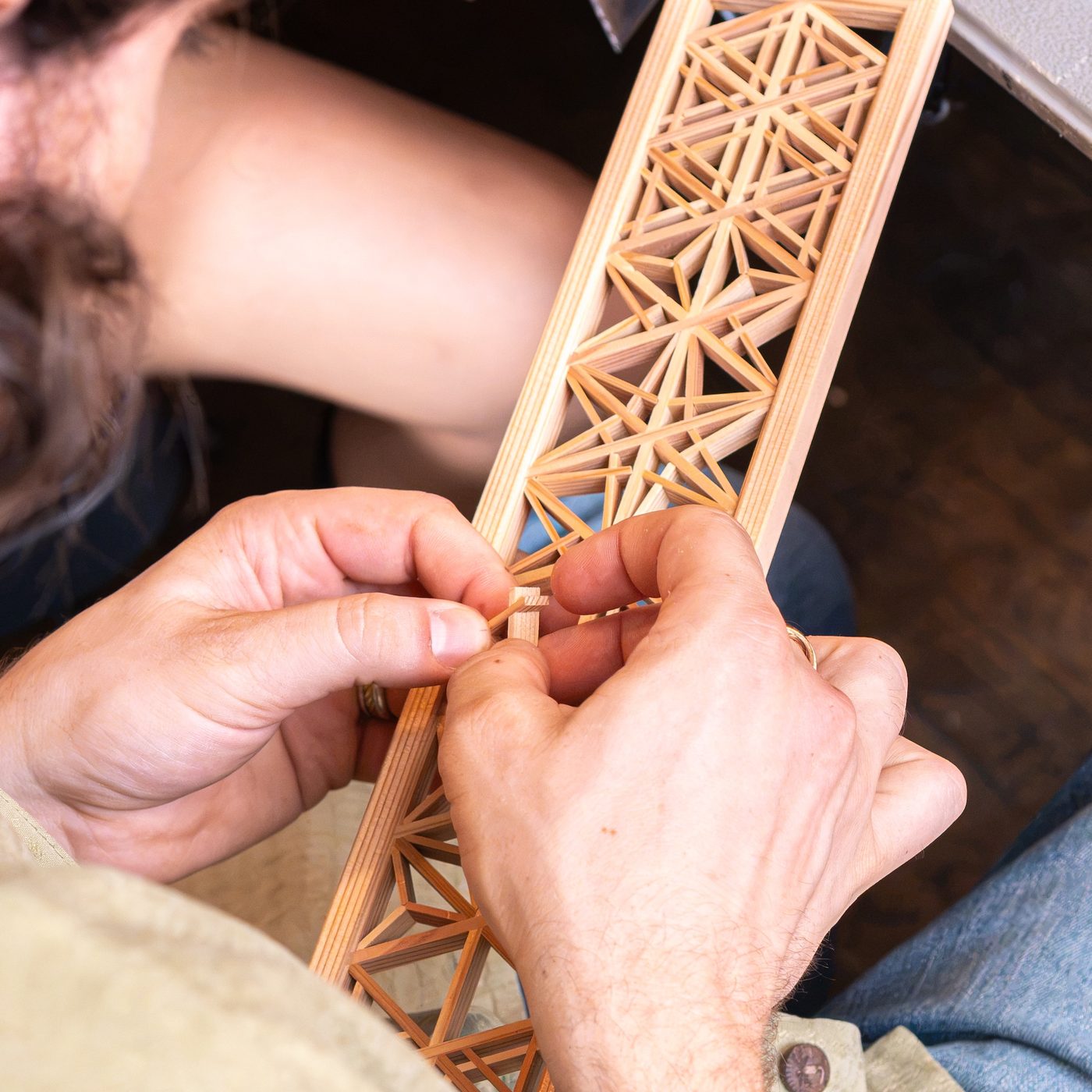
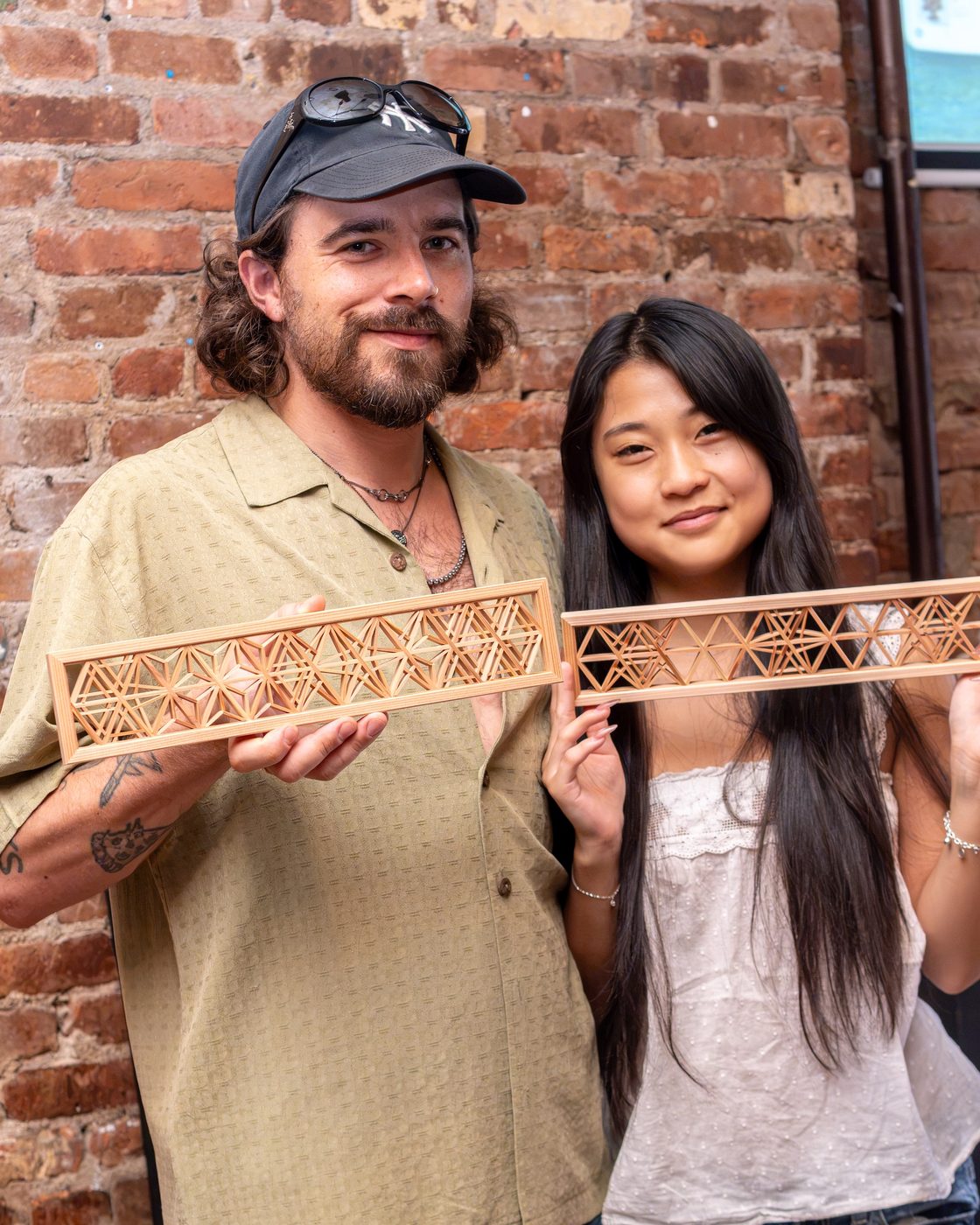
Two students holding their finished kumiko panels after the class at RESOBOXA student holding up the kumiko panel she completed in classHands fitting the last pieces into an asa-no-ha kumiko panel

The Three Foundation Patterns

Every kumiko design begins with these three classic motifs. You will practice each one, then combine them freely into your own piece.

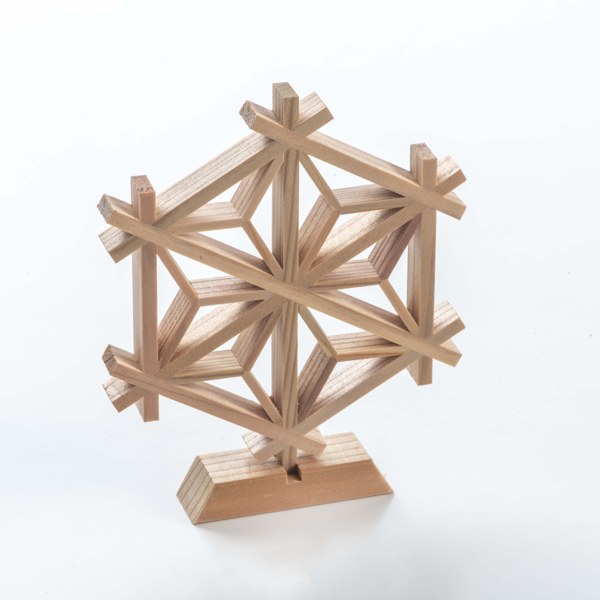
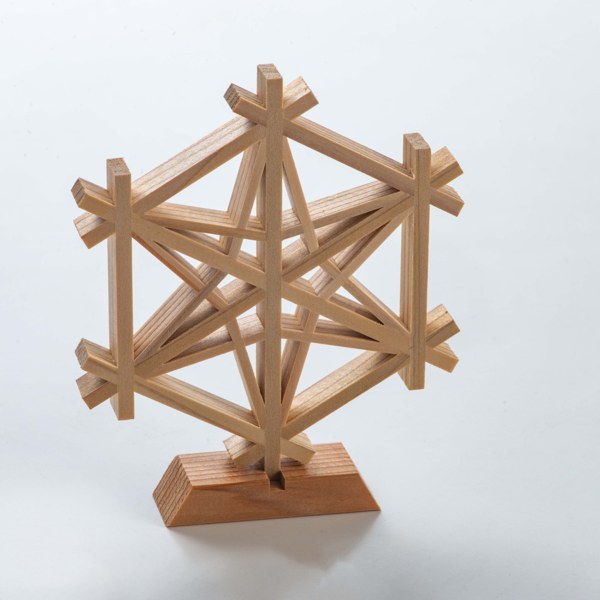
Hexagonal kumiko stand in the asanoha (hemp leaf) pattern
Asa-no-ha (Hemp Leaf)

The most beloved pattern in kumiko — a radiating hemp leaf, long used as a symbol of protection and healthy growth.

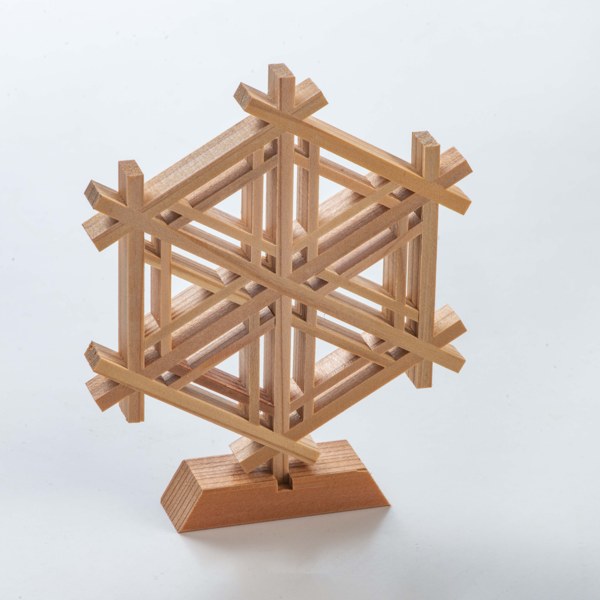
Hexagonal kumiko stand in the rindo (gentian) pattern
Rindō (Gentian)

A star-like lattice inspired by the autumn gentian, carrying a meaning of sincerity.

Hexagonal kumiko stand in the goma (sesame) pattern
Goma (Sesame)

A crisp geometric pattern drawn from the sesame pod, a traditional wish for health and long life.

From our first class

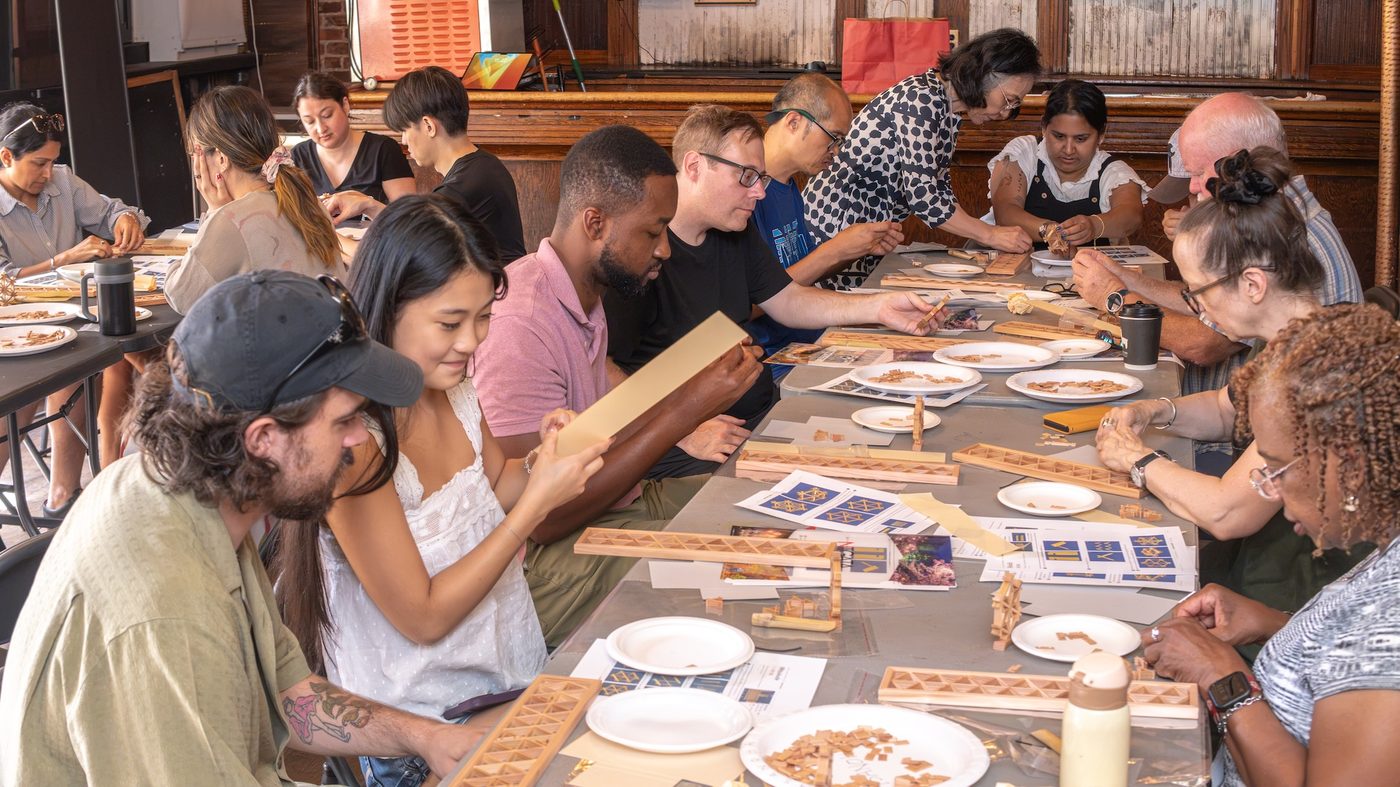
Seventeen people joined us for the very first kumiko class in the East Village, August 2026. Every piece on this page was built that afternoon.

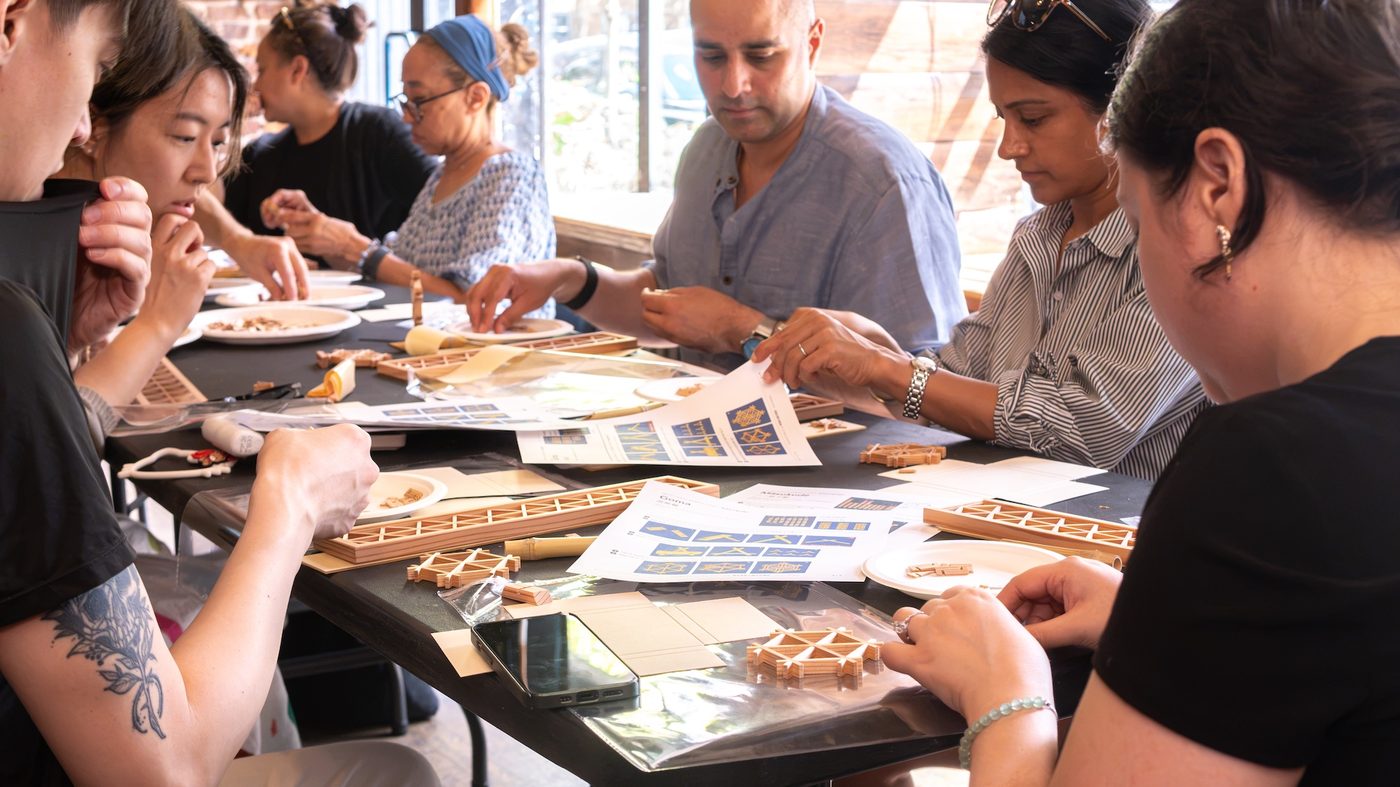
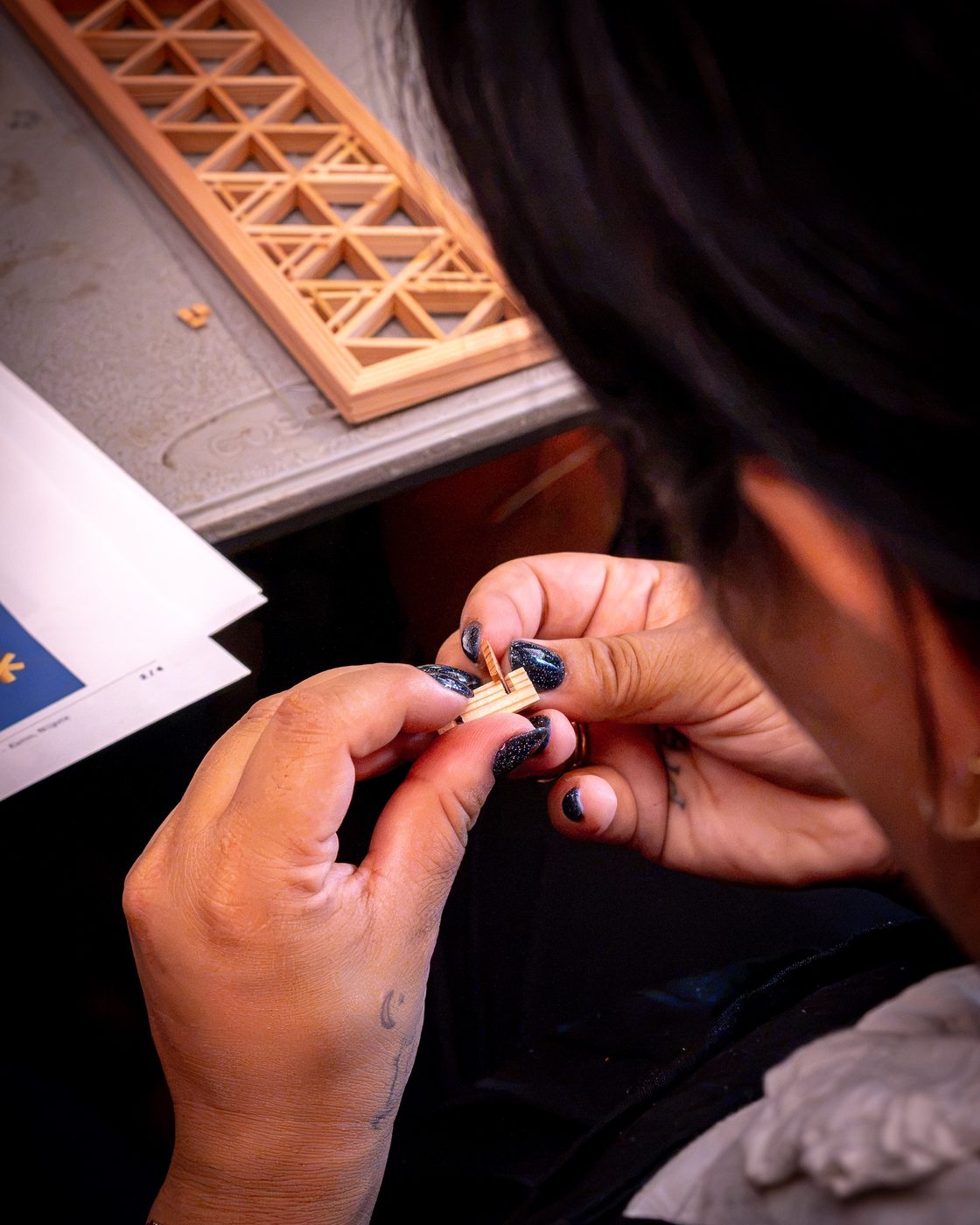
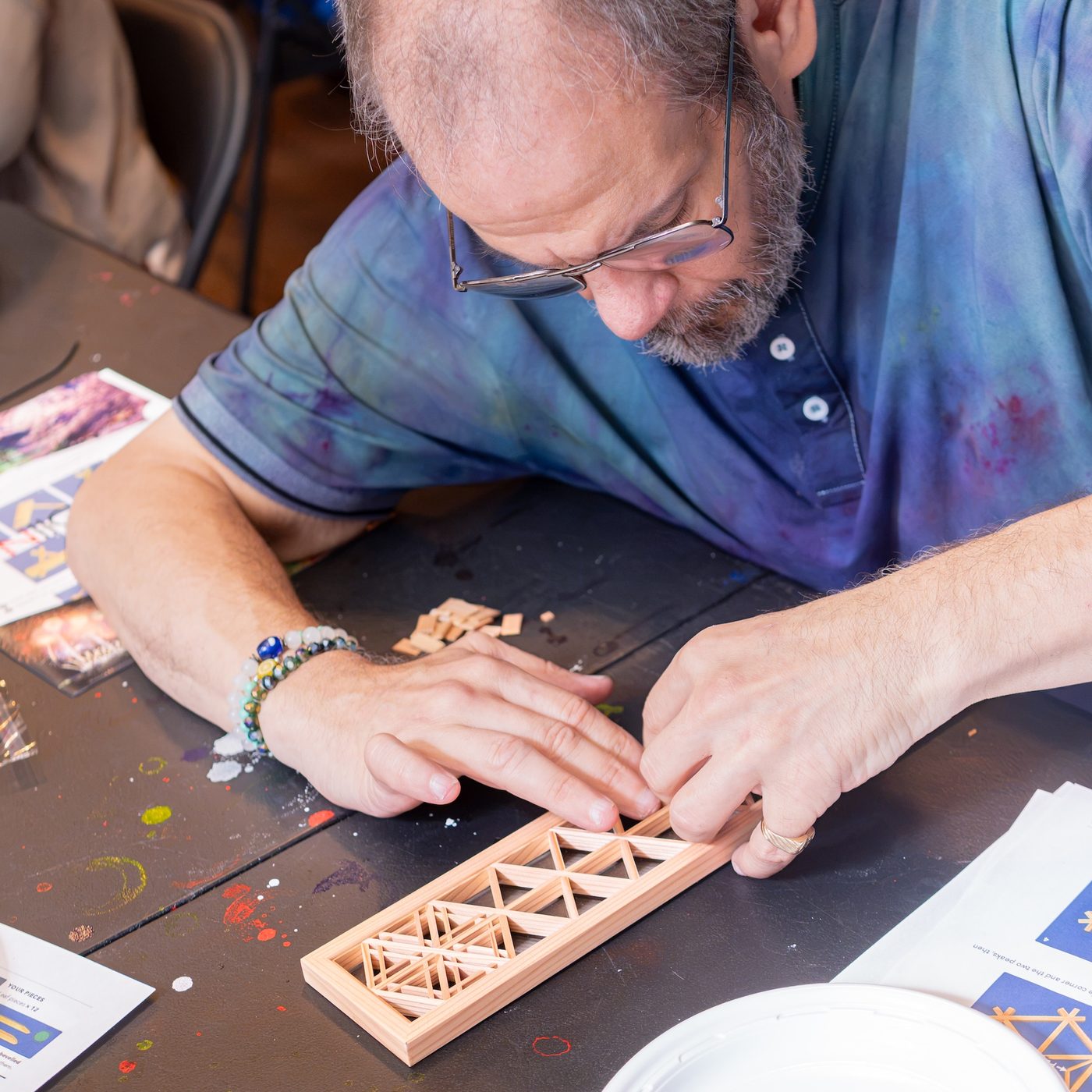
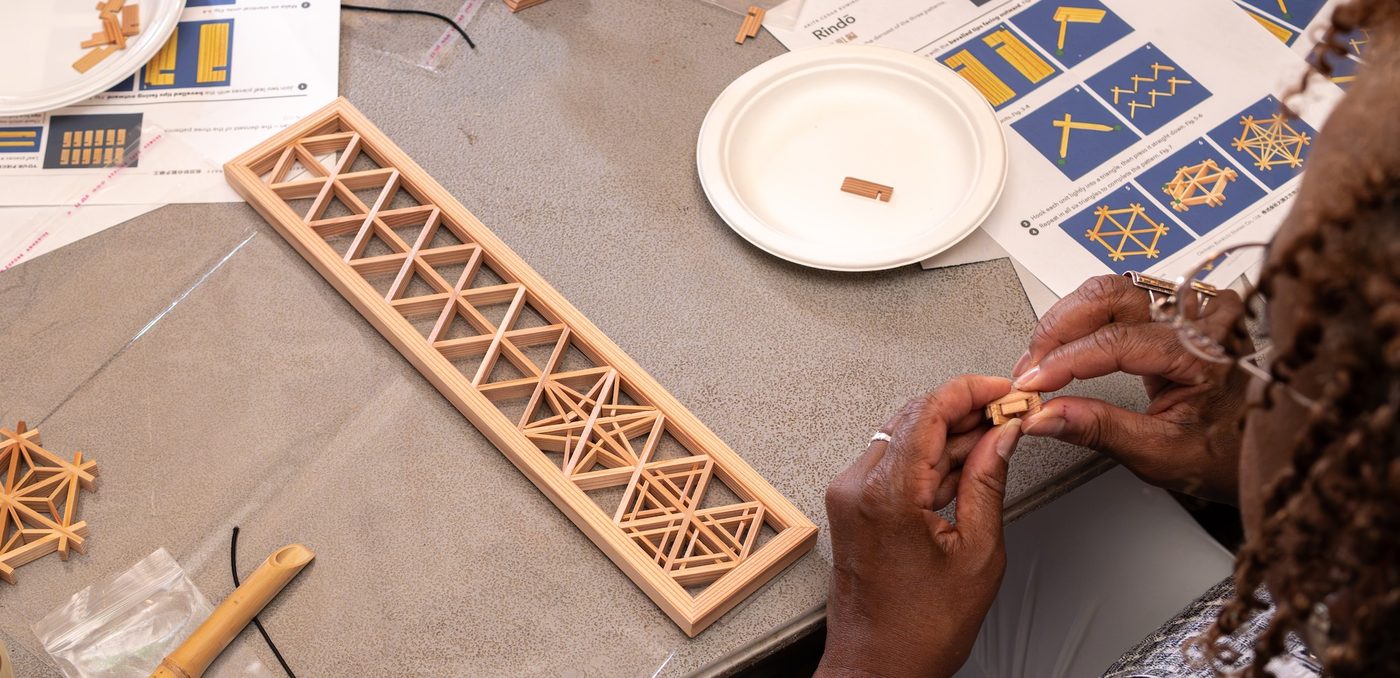
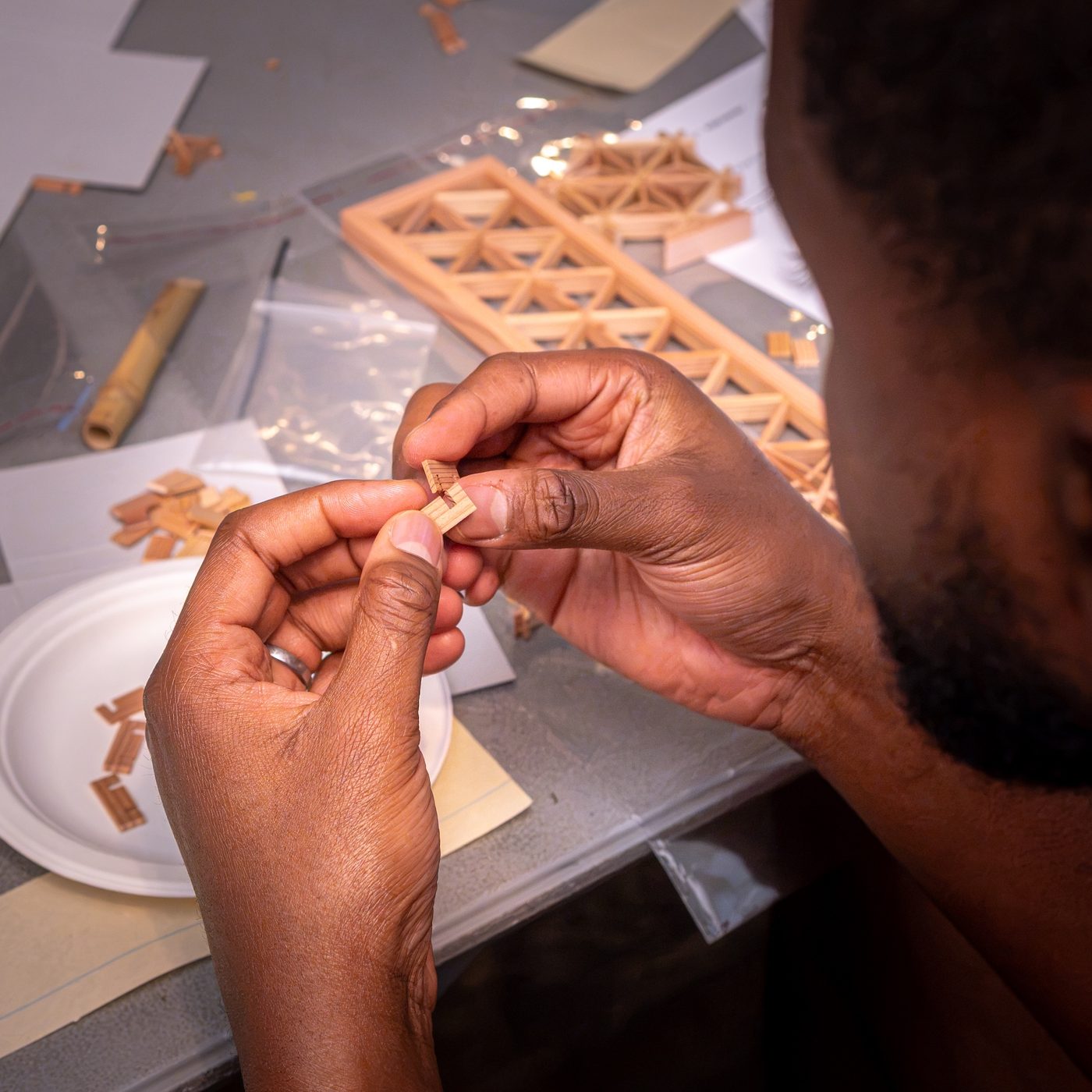
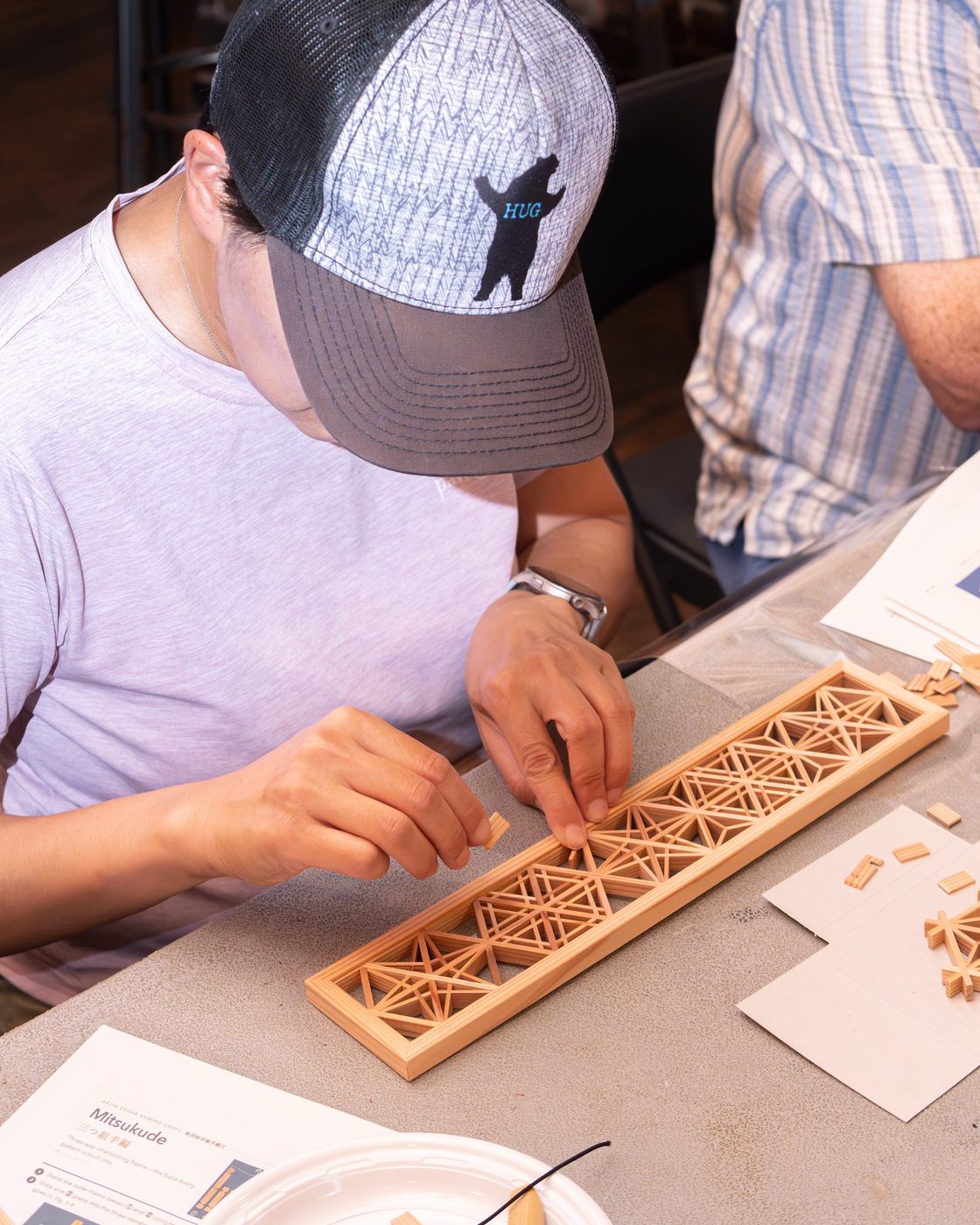
The full table during the kumiko class at RESOBOXTwo students working through a kumiko pattern togetherA student concentrating on fitting a kumiko pieceStudents assembling kumiko lattice along the workbenchA student holding a completed asa-no-ha kumiko unitHands assembling a kumiko lattice frameA student smiling while working on her kumiko pieceClose-up of hands fitting a kumiko piece into the frameA student fitting pieces into a kumiko flower vase frameFitting a leaf piece into the kumiko latticeA kumiko flower vase frame partway through assemblyA student building the long kumiko flower vase panelA student working carefully on her kumiko panelA nearly finished kumiko flower vase in the maker’s handsTwo students with the kumiko flower vases they built

Private and group sessions are available upon request. For inquiries, please email us at class@resobox.com. Planning a team or group event? Learn more about our corporate & group workshops.

About the Makers

Ōminato Bunkichi Shoten

Ōminato Bunkichi Shoten is a kumiko atelier in Kamo, Niigata Prefecture, working in wood and paper since the Meiji era. Its master joiners cut each component to a tenth of a millimetre, building everything from doors and partitions to backlit art panels. Every kit used in this class is made by their hands in the Kamo workshop.
Have a question? Ask me!